
Are Porcelain Jars Suitable for Tea Storage? A Practical Guide to Tea Preservation & Access
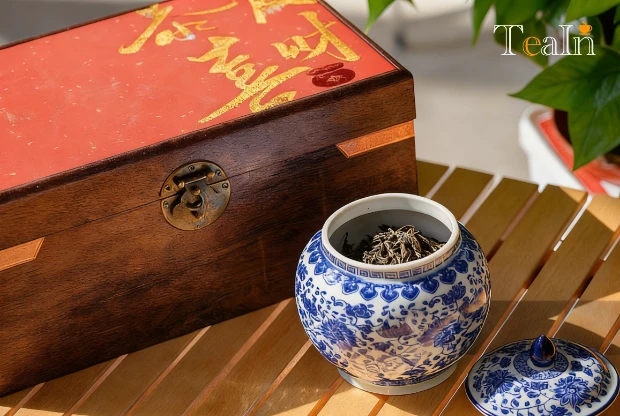
In tea tasting and daily consumption, many people use porcelain jars to store small amounts of tea for easy access. With their elegant appearance and gentle texture, porcelain jars are a popular choice among tea lovers. However, practical use often leads to issues like tea dampness, mold, and flavor loss. The key question arises: are porcelain jars truly suitable for storing and accessing tea? The answer is: porcelain jars are not ideal for long-term tea storage. They can only be used temporarily for short periods, and strict sealing measures are a must. Combining tea storage principles and characteristics of different tea types, this article analyzes the topic from three dimensions—limitations of porcelain jars, tea storage requirements, and proper access methods—to provide a scientific tea preservation and access solution.
I. Core Reasons Porcelain Jars Are Unsuitable for Long-Term Tea Storage
Porcelain jars fail to meet long-term tea storage needs primarily due to structural flaws that contradict tea’s core storage requirements: dryness, airtightness, light protection, and odorlessness.
First, poor airtightness. Traditional porcelain jars typically feature a simple fit between the lid and jar mouth, lacking sealing structures like rubber gaskets. Tiny gaps exist between the lid and mouth, allowing air and moisture to enter easily. This causes tea to absorb moisture, especially in environments with significant temperature and humidity fluctuations, increasing the risk of dampness. This is the main reason many tea lovers find mold in tea stored in porcelain jars.
Second, weak temperature and humidity regulation. Porcelain has strong thermal conductivity, meaning external temperature changes quickly transfer to the jar’s interior, leading to frequent fluctuations in internal temperature and humidity. Aromatic and active compounds in tea are sensitive to temperature, and frequent changes accelerate their oxidation and decomposition, resulting in faded flavor, lost aroma, and diminished quality.
Third, limited light protection. Some porcelain jars adopt translucent or patterned designs for aesthetic appeal, failing to fully block ultraviolet (UV) rays. UV light damages tea pigments and nutrients, causing deterioration—an effect particularly pronounced in unfermented or lightly fermented teas like green tea and white tea.
II. Sensitivity Differences of Different Tea Types to Porcelain Jar Storage
Different tea types have varying production processes and component characteristics, leading to distinct storage requirements. This directly affects their compatibility with porcelain jar storage.
White tea and green tea have the highest demands for dryness and airtightness, making them the least suitable for long-term storage in porcelain jars. Active compounds like flavonoids in white tea and tea polyphenols in green tea are highly susceptible to loss from dampness or oxidation. Storing them in porcelain jars for more than a week may result in faded flavor and dampness. For teas like Fuding white tea that rely on aging, humid environments are especially detrimental.
Black tea and oolong tea are fully or semi-fermented, with relatively stable properties and lower storage demands. Even so, long-term storage in porcelain jars causes aroma evaporation, with noticeable taste deterioration after 3-4 weeks, losing their original richness or floral/fruity notes.
Aging-dependent teas like aged white tea and Pu-erh tea are completely unsuitable for porcelain jar storage. These teas require stable temperature and humidity plus moderate air circulation for proper aging. Porcelain jars’ poor airtightness allows moisture intrusion, disrupting the aging environment, causing mold growth, and hindering flavor transformation.
III. Proper Methods for Temporary Tea Storage in Porcelain Jars
If you appreciate porcelain jars’ aesthetics, they can only be used as temporary containers for short-term access. Strict adherence to the following principles is essential to maximize tea quality preservation:
First, implement double-sealing. Before placing tea in a porcelain jar, transfer it to a food-grade sealed bag, squeeze out excess air, and seal tightly. Then place the sealed bag inside the porcelain jar. The sealed bag effectively blocks moisture and air, compensating for the jar’s poor airtightness.
Second, use small batches for short-term use. Only store 1-2 weeks’ worth of tea at a time to avoid prolonged storage in the jar. For flavor-sensitive teas like white tea and green tea, reduce the amount to a 3-5 day supply to ensure optimal flavor when consumed.
Last, choose an appropriate storage location. Place the porcelain jar with tea in a dry, well-ventilated, and dark area. Keep it away from high-humidity spaces like kitchens and bathrooms, and avoid direct sunlight or areas with large temperature fluctuations, such as windowsills or near heaters.
IV. Recommended Alternative Containers for Tea Storage & Access
Compared to porcelain jars, the following containers better balance convenience and quality preservation, adapting to different usage scenarios:
Purple clay jars offer both aesthetics and functionality. With moderate breathability, they regulate internal humidity and provide better airtightness than porcelain jars. Suitable for teas requiring slight ventilation like oolong tea and black tea, their natural material prevents odor absorption, preserving tea’s pure flavor while serving as an elegant home decor piece.
Tin cans are a premium choice with excellent airtightness and moisture resistance. Chemically stable tin does not react with tea, effectively blocking air, moisture, and UV light. Ideal for high-demand teas like green tea and white tea, tin cans are durable and portable, suitable for office or travel use.
Airtight glass jars cater to tea lovers who enjoy observing tea conditions. Heat-resistant, odorless borosilicate glass paired with silicone gaskets ensures good airtightness, blocking moisture and air. Transparent material allows easy monitoring of tea quantity, making them suitable for colorful teas like black tea and herbal tea. Note that they must be stored in dark areas to avoid UV exposure.
Vacuum-sealed bags with divided containers are a convenient and efficient option. Split tea into single-serve vacuum-sealed bags, then store them in a portable container. This method offers easy access and complete isolation from air and moisture, ideal for offices, travel, or high-quality teas like green tea and white tea, maximizing fresh flavor retention.
Summary
This article explores whether porcelain jars are suitable for tea storage, concluding they are only for short-term temporary use, not long-term preservation. Porcelain jars’ core limitations—poor airtightness and weak temperature/humidity regulation—easily cause tea dampness, mold, and flavor loss, particularly affecting sensitive teas like white and green tea. Different tea types vary in storage sensitivity: white and green tea have the lowest compatibility, while black and oolong tea can be stored temporarily. If using porcelain jars, double-sealing, small batches, and quick consumption are mandatory. Recommended alternatives include purple clay jars (for oolong/black tea), tin cans (for green/white tea), airtight glass jars (for black/herbal tea), and vacuum-sealed bags (for all teas, especially convenient scenarios). The article emphasizes that successful tea storage and access balance convenience and airtightness, with the right container being key to preserving tea quality.