
Do You Need to Weigh Tea Leaves Before Brewing Pros Cons and Practical Guide
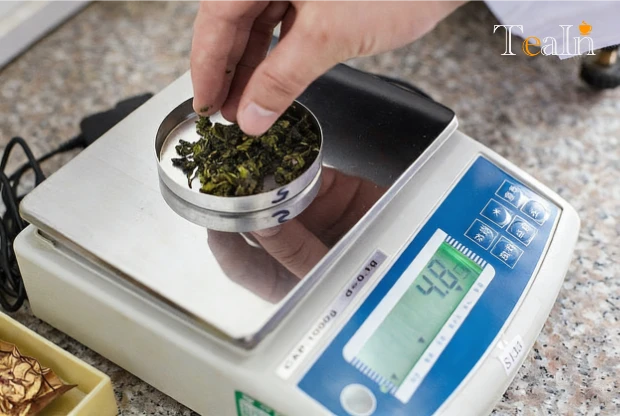
Many tea lovers have had this experience: they taste an amazing cup of tea at a tea shop, but when they brew the same tea at home, it never quite lives up to the original. Or they grab a handful of tea leaves by feel, resulting in a brew that’s sometimes as bland as water and other times too bitter to swallow. This raises the question: should you really weigh tea leaves before brewing? Some see it as "trying to look professional," while others consider it the key to making great tea. The truth is, there’s no absolute answer. The decision depends on your personal needs, the type of tea, and the occasion—finding a balance between precision and spontaneity.
I. Why Do Some Insist on Weighing Tea Leaves Before Brewing?
Weighing tea leaves may seem "troublesome," but it solves many practical problems. It’s a cost-effective choice especially for beginners or those who value consistent flavor.
1. Ensure Consistent Taste and Avoid Wasting Good Tea
Tea flavor is extremely sensitive to the amount of leaves used. Even a 1-2 gram difference can turn a "sweet and smooth" brew into a "bitter and harsh" one. For example, brewing ripe Pu-erh in a 110ml gaiwan, 6 grams is the golden ratio for a rich, non-bitter cup. Grabbing an extra 2 grams by feel not only causes excessive extraction of tea polyphenols and caffeine but also shortens the number of infusions. A 357-gram cake of Pu-erh that could yield 50 cups might only make 40 if you use too many leaves, wasting both tea and money. Weighing tea allows precise control of the tea-to-water ratio (most teas recommend 1:50, or 1 gram of tea per 50 milliliters of water), ensuring each cup meets your desired strength and avoiding flavor inconsistencies that waste good tea.
2. Help Beginners Build Basic Knowledge and Avoid Mistakes
For new tea drinkers, the "density difference" between different tea types often leads to misjudgment. Baihao Yinzhen (Silver Needle) has dense buds, so a handful might weigh 10 grams. Loose Shoumei, on the other hand, is fluffy, and the same handful could be only 3 grams. Brewing by feel easily ruins the tea. Weighing helps beginners quickly master basic ratios like "3 grams of green tea for a 110ml gaiwan" or "8 grams of rock tea for a 110ml gaiwan." Through repeated precise brewing, they gradually develop an understanding of tea characteristics—learning, for example, to use less granular Tieguanyin and more fluffy Shoumei—laying the foundation for brewing by experience later.
3. A Necessity for Professional Settings
In tea tasting evaluations, tea enthusiast gatherings, or commercial contexts, weighing tea is a sign of professionalism. According to the Tea Sensory Evaluation Methods, the error in tea quantity should be within 0.1 grams during tastings to objectively compare flavor differences between teas. For instance, when evaluating two types of raw Pu-erh, only by using the same amount of tea, water temperature, and brewing time can you accurately judge which has a longer-lasting aroma or more pronounced aftertaste. Brewing by feel makes the results unreliable due to individual differences in technique.
4. Avoid Health Risks of Long-Term Strong Tea Consumption
Many people habitually grab a large handful of tea leaves and steep them for a long time, thinking it makes the tea more flavorful. However, long-term consumption of strong tea can dull taste buds and may affect nutrient absorption. Weighing tea helps consciously control the amount used. For example, brewing green tea in a 300ml mug with 1-2 grams of leaves produces a fresh, crisp taste, avoiding over-strong brews caused by "adding extra by feel" and protecting both taste buds and overall health.
II. Can You Make Good Tea Without Weighing the Leaves?
For experienced tea lovers or those who drink tea casually daily, it’s absolutely possible to brew a satisfying cup without a scale. The key is mastering "alternative methods" and understanding "tea type rules."
1. Experienced Tea Drinkers’ "Muscle Memory": Built Through Practice
Tea drinkers with decades of experience can often judge the amount of tea by "feel" and "sight." Grabbing a handful of Baihao Yinzhen, they can estimate the weight based on the tightness of the buds. When prying Pu-erh cakes, they know if the piece is enough by its thickness and compression. This ability isn’t innate; it’s "muscle memory" developed through long-term brewing. For example, using the same 110ml gaiwan for rock tea every time, they eventually learn that "covering 1/3 of the gaiwan" is roughly 8 grams. For green tea, "a thin layer covering the bottom of the gaiwan" is about 3 grams. However, this experience requires extensive practice and is hard for beginners to master quickly.
2. Volume-Based Tea Measurement: A Simple Practical Alternative
Without a scale, you can estimate the amount based on the tea’s shape and the container’s volume. This is the most convenient "lazy method" for daily use. Different teas have varying dry densities, so the corresponding volume ratios differ (based on a 110ml gaiwan):
Green tea and yellow tea: These teas are tender and infuse quickly, requiring the least amount. Flat teas like West Lake Longjing or Zhuyeqing only need a thin layer covering the gaiwan bottom. Fluffy teas like Huangshan Maofeng or Guapian should fill 1/5 of the gaiwan. Avoid covering the lid while brewing to prevent bitterness.
Black tea: Use a bit more than green tea. Fine-stranded teas like Keemun Black Tea or Jinjunmei fill 1/5 of the gaiwan, while thick-stranded Dianhong fills 1/4. This ensures distinct sweetness without over-concentration.
Oolong tea: Adjust based on shape. Granular teas like Tieguanyin or Dongding Oolong fill 1/5 (they expand when brewed), while strip-shaped teas like Da Hong Pao or Fenghuang Dancong fill 1/3 to fully release their aroma.
White tea: Fluffy loose white tea needs more, filling 3/4 or 1/2 of the gaiwan. Compressed white tea cakes are dense, so 1/5 is enough to avoid bitterness.
Dark tea: Compressed teas like Pu-erh cakes or bricks fill 1/5 of the gaiwan. You can add a bit more if you prefer a stronger taste, but extend the infusion time to balance the strength.
This method doesn’t require precise calculations. Just remember "how much volume each tea needs," and it’s sufficient for daily brewing. For example, brewing Dianhong in a 300ml mug, grabbing a handful that fills 2/3 of the mug’s volume yields a sweet, palatable cup.
3. Daily Scenarios: Spontaneity Matters More Than Precision
For casual daily tea drinking at home, there’s no need to obsess over "gram precision." For instance, brewing green tea in a mug in the morning, grabbing a small pinch (about 2 grams) and using 85℃ water for a fresh, non-bitter taste is enough. Sharing aged white tea with friends on weekends, adding a bit more by feel, as long as everyone enjoys it, there’s no need to worry about "being 0.5 grams off." Drinking tea is supposed to be relaxing. If you have to find a scale and weigh grams every time, you’ll lose the comfort of the experience.
III. How to Choose? Tips for Balancing Precision and Spontaneity
Whether to weigh tea leaves doesn’t have to be an all-or-nothing decision. You can adjust flexibly based on your situation:
1. Beginners Should Prioritize Weighing, Then Become Flexible After Building Basics
New tea drinkers are advised to buy an affordable electronic scale (under 50 yuan) and practice precise brewing for their regular teas for 1-2 months. For example, brew 3 grams of green tea or 8 grams of rock tea in a 110ml gaiwan daily to feel the flavor differences with different amounts. Once familiar, try replacing the scale with the "volume method" and gradually transition to brewing by feel. This helps avoid many mistakes.
2. Weigh Sensitive Tea Types, Be Spontaneous With Regular Ones
Teas sensitive to the amount used, like compressed Pu-erh, rock tea, and Baihao Yinzhen, benefit more from weighing. Compressed Pu-erh has large density variations, making it easy to use too much without weighing. Rock tea has a strong aroma—too little results in weak fragrance, while too much causes bitterness. For daily teas like green tea or black tea, if you don’t have high taste requirements, brewing by feel or volume is sufficient.
3. Tool Selection: Simple and Practical Is Best
You don’t need an expensive scale. A small electronic scale with a 500-gram capacity and 0.1-gram precision is enough. It’s easy to store and durable. If you find electronic scales cumbersome, you can use a "chaze" (traditional tea spoon) as an aid. While it can’t weigh precisely, it helps control the volume of tea per brew, making it more stable than grabbing with your hands.
IV. Conclusion
Weighing tea leaves before brewing isn’t about "trying to look professional"; it’s about maximizing the tea’s potential. Not weighing them isn’t "careless"; it’s about enjoying the spontaneity of tea drinking. The key is finding what works for you: beginners use scales to build knowledge, experienced drinkers rely on experience to control flavor, and casual drinkers brew however feels most comfortable. After all, the ultimate goal of making tea is to enjoy a cup you love—not to be constrained by "grams."
Summary
This article explores the question "Do you need to weigh tea leaves before brewing?" analyzing the pros and cons of precise and spontaneous tea measurement, as well as their applicable scenarios. Weighing tea leaves offers core advantages: ensuring consistent taste, helping beginners build basic knowledge, avoiding wasted tea, and meeting professional evaluation needs. It’s especially suitable for tea types sensitive to quantity, such as Pu-erh and rock tea. Without a scale, you can estimate using experienced tea drinkers’ "muscle memory" or the "volume-based method" (with different volume ratios for different teas), which is ideal for casual daily drinking. The article recommends choosing based on your experience and the tea type: beginners should prioritize weighing to build basics, sensitive tea types benefit from weighing, and regular teas allow flexibility. Ultimately, it emphasizes that "brewing a cup you love" is the core, and there’s no need to be tied to precision.