
Does Boiling Water Affect Fuding White Tea’s Taste? A Scientific Brewing Guide
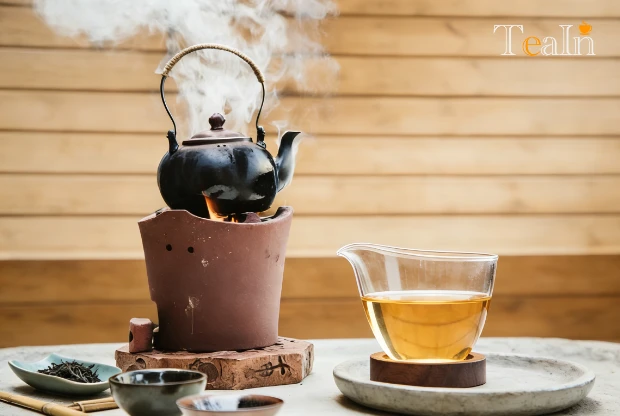
Many tea lovers intentionally lower the water temperature when brewing Fuding white tea, especially for delicate varieties like Baihao Yinzhen. They worry that high heat might damage the tea’s internal components and ruin its taste. However, the opposite is true. Fuding white tea’s unique production process allows it to fully tolerate boiling water—water above 95℃ is even the key to unlocking its complete flavor. Low-temperature water, on the other hand, struggles to extract the tea’s core nutrients and aromas, leaving the liquor thin and tasteless. Combining Fuding white tea’s craft characteristics, component properties, and practical experience, this article addresses the core question of whether boiling water affects taste from four dimensions: reasons for withstanding boiling water, benefits of boiling water brewing, variety-specific brewing techniques, and common mistakes. It helps tea lovers scientifically brew authentic-tasting Fuding white tea.
I. Core Reasons Fuding White Tea Tolerates Boiling Water: Craft and Structural Traits
Fuding white tea’s ability to withstand boiling water stems from its unique production process: "no pan-frying, no rolling, natural withering, and drying to shape"—a fundamental difference from other tea types.
Unlike green tea (which undergoes high-temperature fixing) or black tea (which undergoes heavy fermentation), Fuding white tea is made through a gentle process. Fresh leaves are naturally withered to slowly evaporate moisture, then dried to lock in quality. This process preserves the tea’s cell structure intact, with tough cell walls protecting internal active ingredients from rapid decomposition under high heat. Water below 90℃ cannot penetrate these resilient cell walls, leaving key components like flavonoids, amino acids, and aromatic substances under-extracted, resulting in a bland liquor. Boiling water, however, has sufficient energy to gently break through the cell walls, allowing nutrients and flavors to release evenly without causing damage.
Additionally, Fuding white tea has a low natural fermentation degree (5%-10%), with relatively stable internal components. Its rich amino acids and soluble sugars neutralize any slight astringency potentially caused by high temperatures, maintaining a sweet and smooth liquor. Unlike delicate green tea that easily turns bitter when overheated, Fuding white tea requires no fear of boiling water compromising its taste.
II. Three Key Benefits of Boiling Water for Fuding White Tea
1. Awakens Multi-Layered Aromas and Enhances Flavor Depth
Fuding white tea boasts a layered aroma profile: fresh floral and honey notes in new tea, and jujube, medicinal, or woody notes in aged tea. These aromatic compounds are tightly bound to the tea’s cell structure and hard to release at low temperatures. Boiling water quickly activates these substances, making the aroma richer and longer-lasting. For example, the fresh honey scent of Baihao Yinzhen and the mellow aged aroma of Shoumei become more distinct with boiling water, creating an immersive tasting experience.
2. Maximizes Nutrient Extraction and Health Benefits
Fuding white tea’s health advantages come from active ingredients like flavonoids, catechins, and amino acids—all water-soluble but requiring sufficient temperature to dissolve fully. Studies show that brewing Fuding white tea with boiling water extracts 30%-40% more flavonoids than warm water. This allows drinkers to better absorb its antioxidant and soothing properties, synchronizing the tea’s nutritional value with its taste.
3. Reveals True Tea Quality and Avoids Poor Choices
High temperatures amplify both the strengths and weaknesses of tea, serving as a "litmus test" for Fuding white tea quality. High-quality white tea, when brewed with boiling water, offers a pure flavor, clear liquor, and sweet aftertaste. Inferior tea (e.g., mixed with old/new leaves or poorly dried) reveals more obvious off-tastes or moldy notes under high heat, helping tea lovers quickly distinguish quality. For discerning tea enthusiasts, boiling water brewing aids in selecting truly fine white tea.
III. Variety-Specific Boiling Water Brewing Tips for Fuding White Tea
While boiling water suits all Fuding white tea varieties, slight adjustments based on leaf tenderness optimize taste further.
1. Baihao Yinzhen (Silver Needle): Gentle Boiling Water and Quick Steeping
As the most delicate variety, Baihao Yinzhen is made from single buds covered in fine white hairs, with relatively fragile cell structures.
- Temperature control: Bring water to a boil, then let it rest for 5 seconds to cool to around 95℃ before brewing, avoiding direct high-heat impact on the buds.
- Steeping rhythm: First steep for 5-8 seconds and pour quickly. Extend each subsequent steep by 3-5 seconds. This preserves the bud’s freshness and sweetness while gradually releasing internal components, preventing astringency.
- Utensil choice: Prefer a 110ml gaiwan with 3 grams of tea. Gaiwans allow quick water control and reduce steeping time.
2. Bai Mudan (White Peony): Direct Boiling Water and Even Wetting
Bai Mudan consists of one bud and one or two leaves, with a balanced bud-to-leaf ratio and strong resilience, suitable for direct boiling water brewing.
- Temperature control: No cooling needed—use 100℃ boiling water directly.
- Brewing method: Pour water along the gaiwan’s edge in a circular motion to evenly wet the leaves, avoiding direct pouring on the center.
- Steeping rhythm: First steep for 8-10 seconds, extending each subsequent steep by 5 seconds. This fully awakens its fresh floral and fruity notes, maintaining a smooth and balanced liquor.
3. Shoumei/Gongmei: Full Boiling Water and Extended Steeping
Shoumei and Gongmei are made from mature leaves and stems, with thicker cell walls and richer internal substances. They require full boiling water for complete extraction.
- Temperature control: Maintain 100℃ boiling water. Aged Shoumei (stored for over 3 years) can even be simmered directly in boiling water.
- Steeping rhythm: First steep for 10-15 seconds, extending to 20-30 seconds for later steeps. This fully releases aged flavors like jujube and medicinal notes, making the liquor more mellow and silky.
- Special tip: When simmering aged Shoumei, add tea to boiling water and keep it at a gentle simmer for 5-8 minutes for a richer flavor.
IV. Common Mistakes in Boiling Water Brewing and How to Avoid Them
1. Over-Steeping
Boiling water extracts components quickly. Over-steeping (more than 30 seconds for the first steep) leads to excessive tea polyphenol release, resulting in a bitter liquor. Follow the "quick first steep, gradual extension" rule for all varieties to avoid over-steeping.
2. Using Hard Water
Calcium and magnesium ions in hard water react with tea components to form precipitates, making the liquor cloudy and dull-tasting. Use soft water (e.g., mountain spring water or purified water), boiled before brewing, to preserve the tea’s pure flavor.
3. Re-Boiling the Same Water
Re-boiled water loses oxygen and increases mineral concentration, leading to a flat-tasting liquor. Use freshly boiled water for each brew to ensure a lively taste.
4. Pouring Boiling Water Directly on Delicate Buds
For delicate varieties like Baihao Yinzhen, pouring boiling water directly on buds damages the fine hairs and causes local over-extraction. Tilt the gaiwan and pour water along the wall to gently soak the leaves.
Summary
This article focuses on the core question "Does boiling water affect Fuding white tea’s taste?" and concludes that boiling water does not harm the tea’s taste—it instead unlocks its complete flavor. Fuding white tea’s "no pan-frying, no rolling" process preserves intact cell structures, while its low fermentation keeps components stable. Amino acids and soluble sugars neutralize potential astringency from high temperatures, allowing full tolerance of boiling water. Benefits of boiling water brewing include releasing multi-layered aromas, boosting nutrient extraction, and revealing true quality. Variety-specific adjustments are recommended: Baihao Yinzhen with 95℃ water and quick steeping, Bai Mudan with direct boiling water, and Shoumei/Gongmei with full 100℃ boiling water and extended steeping. Avoid common mistakes like over-steeping, using hard water, re-boiling water, or pouring directly on buds. The article emphasizes that scientific use of boiling water is key to brewing Fuding white tea, enabling tea lovers to fully experience its natural sweet and mellow flavor.