
Does Fuding White Tea Have Raw and Ripe Varieties? Core Analysis of Craft and Classification
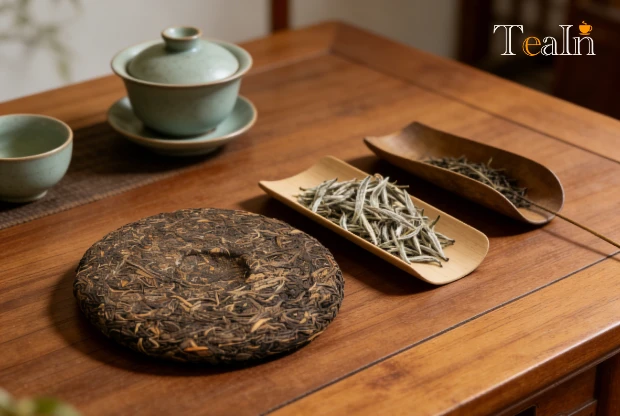
Amid the global white tea consumption boom, many tea lovers familiar with Pu-erh tea often wonder if Fuding white tea, like Pu-erh, is divided into raw and ripe varieties. This question not only confuses new tea enthusiasts but also impacts the correct understanding and tasting of white tea. The answer is clear: Fuding white tea has no such classification of raw or ripe tea. The core reason lies in the fundamental differences between Fuding white tea and Pu-erh tea in terms of production craft and classification logic. Combining the craft characteristics, classification standards, and aging rules of the two tea types, this article details why Fuding white tea lacks raw/ripe distinctions, clarifies the core differences between fresh/aged white tea and raw/ripe Pu-erh tea, and helps tea lovers establish a clear understanding.
I. Origin of the Raw/Ripe Concept: A Pu-erh-Specific Classification
The raw/ripe classification is not a universal standard for tea but an exclusive categorization for Pu-erh tea. Its core basis is whether the "wet pile fermentation" process is applied during production.
Raw Pu-erh (Sheng Pu) is made by withering, fixing, rolling fresh tea leaves, then drying them directly to produce "sun-dried green tea," which is then pressed into shape. Without artificial fermentation, raw Pu-erh retains natural active ingredients such as tea polyphenols and catechins, with a cool nature. It requires long-term aging to allow natural transformation of components, gradually maturing from astringent to mellow in taste.
Ripe Pu-erh (Shu Pu) adds a key "wet pile fermentation" step to the raw Pu-erh process. Sun-dried green tea is piled in a humid environment, and under artificially controlled temperature and humidity, the tea undergoes rapid fermentation driven by microorganisms. After artificial intervention, ripe Pu-erh becomes mild in nature, with a reddish-brown liquor and a smooth, mellow taste, ready for consumption without long-term aging.
In short, the core difference between raw and ripe Pu-erh lies in "whether artificial wet pile fermentation is used." This classification distinguishes the differences in nature and taste brought by the two crafts, a logic that does not apply to Fuding white tea.
II. Core Reason Fuding White Tea Has No Raw/Ripe Distinction: Craft and Fermentation Characteristics
Fuding white tea’s lack of raw/ripe classification stems from its unique production craft and fermentation method, which are entirely different from Pu-erh’s craft system.
The core craft of Fuding white tea is "no pan-frying, no rolling, natural withering, and drying to shape." After harvesting, fresh tea leaves are directly spread in a ventilated, light-proof environment for natural withering, allowing moisture to evaporate slowly. Meanwhile, mild natural fermentation occurs inside the leaves (fermentation degree usually between 5%-10%), and finally, the quality is locked in through drying or sun-drying. The entire process involves no artificial fixing (or only minimal fixing), let alone the artificial wet pile fermentation step used in Pu-erh. It relies solely on the tea’s own enzymatic reactions to complete mild transformation.
This "mild natural fermentation" craft means Fuding white tea never exists in an unfermented state like "raw tea" nor undergoes the artificial deep fermentation treatment of "ripe tea" from the moment of production. Its fermentation process is gentle and natural. By the time of drying and shaping, its flavor and nature are basically stable. Subsequent aging is not a process of "turning from raw to ripe" but a slow optimization in a dry environment.
Additionally, Fuding white tea is mild in nature. It is neither as cool as raw Pu-erh nor requires artificial fermentation to alter its nature like ripe Pu-erh. Whether fresh or aged, its core craft characteristics remain unchanged, so there is naturally no raw/ripe distinction.
III. Core Classification of Fuding White Tea: Fresh vs. Aged, Not Raw vs. Ripe
Fuding white tea’s classification logic is entirely different from Pu-erh’s. It is centered on "aging time," divided into fresh tea and aged tea, a classification fundamentally distinct from "raw/ripe."
Fresh Fuding white tea refers to tea produced and processed in the current year. Its liquor is apricot yellow or pale yellowish-green, with a fresh, sweet taste and a clean floral or grassy aroma, retaining the tea’s most authentic natural flavor. Mild in nature, fresh white tea can be consumed directly without aging, suitable for tea lovers who prefer fresh tastes.
Aged Fuding white tea refers to tea aged for more than 3 years. In a dry, sealed, and light-proof storage environment, the active components in the tea undergo slow transformation: tea polyphenols gradually decrease, flavonoid content continues to increase, flavor evolves from fresh to warm and mellow, aroma shifts from floral to jujube, medicinal, or woody, and the liquor color deepens to amber or orange-red.
The aging of aged white tea is a process of "natural optimization," not "fermentation to ripeness." It does not change the core craft attributes of white tea but only makes the flavor more mellow and the nature more balanced. Unlike ripe Pu-erh, which completely alters the tea’s essence through artificial fermentation, the difference between fresh and aged white tea lies in "flavor optimization brought by aging time," not "raw/ripe differences caused by different crafts."
IV. Common Misconceptions and Practical Identification Tips
Common Misconceptions
- Believing "fresh white tea is raw tea and aged white tea is ripe tea": This is the most common misunderstanding. The aging of aged white tea is natural transformation without artificial fermentation, and its nature and core craft remain unchanged—completely different from the artificial fermentation of ripe Pu-erh.
- Using liquor color as a criterion for judging raw/ripe: The reddish-brown liquor of aged Fuding white tea is a result of natural aging, not fermentation, and cannot be equated with the fermented liquor color of ripe Pu-erh.
- Confusing craft logic: Applying Pu-erh’s raw/ripe classification to all teas ignores the unique craftsmanship of different tea types.
Practical Identification Tips
- Distinguish Fuding white tea from Pu-erh: If the tea is labeled "Sheng Pu" or "Shu Pu," it belongs to Pu-erh. Fuding white tea packaging usually indicates varieties such as "Baihao Yinzhen," "Bai Mudan," or "Shoumei," or aging time like "2023 Fresh Tea" or "2018 Aged White Tea." It will never bear the words "raw tea" or "ripe tea."
- Tasting judgment: Fresh white tea is fresh and sweet, while aged white tea is warm and mellow. Neither has the astringency of raw Pu-erh nor the fermented taste of ripe Pu-erh, with a more natural and pure flavor.
Summary
This article focuses on the core question "Does Fuding white tea have raw and ripe varieties?" and concludes that Fuding white tea has no such classification. The raw/ripe distinction is an exclusive standard for Pu-erh tea, based on "whether artificial wet pile fermentation is used." Neither the natural state of raw Pu-erh nor the artificial fermentation craft of ripe Pu-erh applies to Fuding white tea. The core craft of Fuding white tea is "no pan-frying, no rolling, natural withering, and mild fermentation," without artificial wet pile fermentation, so raw/ripe distinctions never exist from the start. Its classification logic centers on aging time, dividing it into fresh and aged tea. The aging of aged white tea is a natural optimization process, not a "transition from raw to ripe." The article also clarifies common misconceptions such as "fresh white tea = raw tea" and "aged white tea = ripe tea," and provides identification suggestions based on craft and tasting to help tea lovers correctly understand Fuding white tea’s classification system and core characteristics.