
How Do Different Compression Methods Affect White Tea’s Taste?
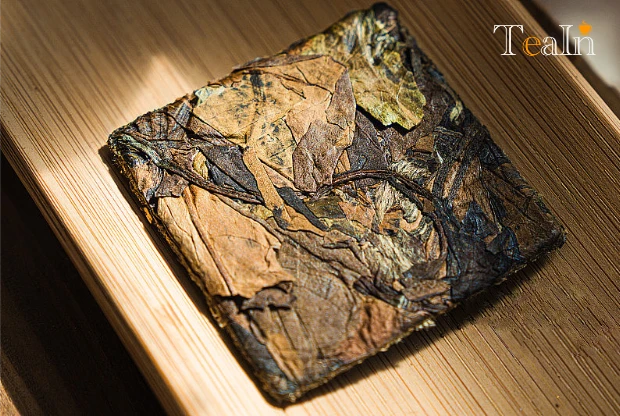
When people talk about white tea, many new tea lovers assume the "white" refers to the tea’s bud and leaf appearance, covered in fine white down. In Fuding, the core white tea-producing area, "white" also hints at the simplicity of its production process.
As we all know, traditionally processed white tea is neither fried nor rolled. It only undergoes two steps—withering and drying—to retain the most natural tea flavor. Initially, most white tea was sold as loose leaves with naturally spread strips. It wasn’t until around 2006 that compressed white tea cakes appeared.
Compared to loose white tea, tea cakes add high-temperature steaming and compression steps. These not only solve the inconvenience of packaging, transporting, and storing traditional loose white tea but also promote the transformation of the tea’s internal substances.

Even for the same white tea from the same origin with identical raw materials, loose leaves (retaining their natural shape) and compressed cakes often differ in color, aroma, and taste due to variations in internal substance transformation.
However, many people consider compression a "detrimental" process for white tea. This is especially true for Silver Needle, the highest-grade white tea with tender buds and leaves. Compressing Silver Needle easily breaks the buds and leaves, making it impossible to admire the visual beauty of "upright spears" when brewed—a real pity.
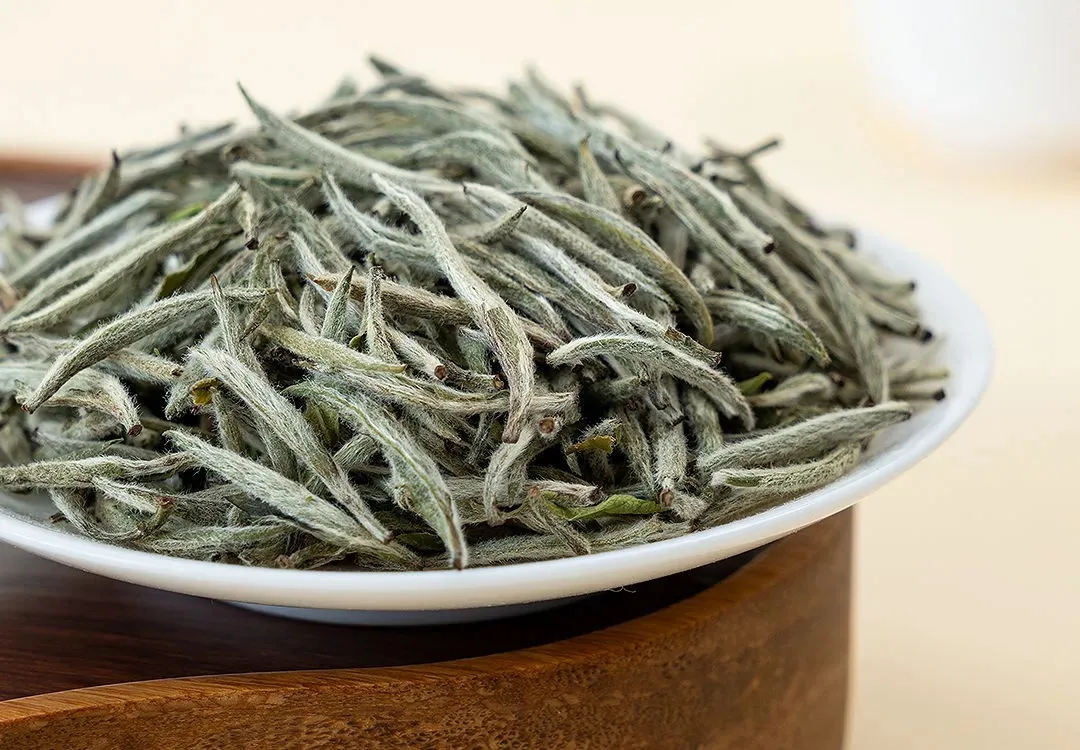
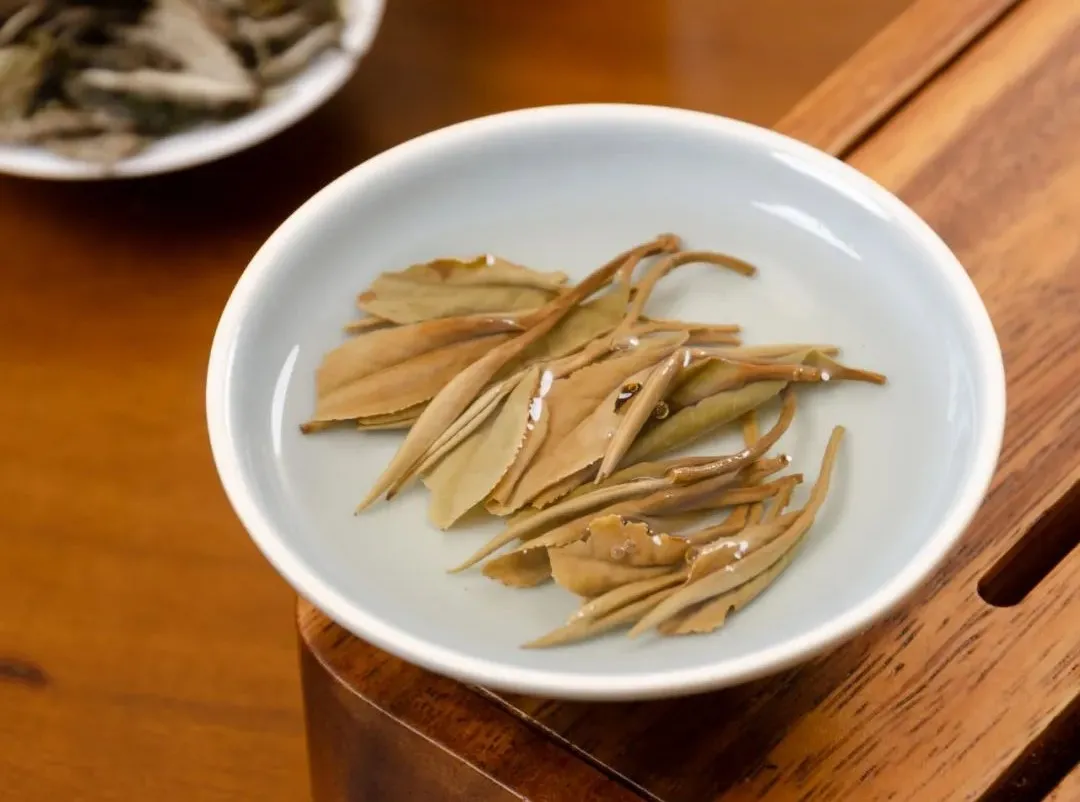
Loose leaf form preserves the integrity of Silver Needle’s strips. Its silvery white appearance creates a visual feast of "upright spears covered in snow-like down" when steeped, with a lingering downy and honey aroma. For this reason, Silver Needle is rarely compressed into cakes.
On the other hand, Gongmei (made from local Xiaocai Tea varieties) and Shoumei (with more mature, coarser raw materials) are more suitable for compression. So, what transformations occur during compression, and how does the taste differ from loose tea?
A recent study published in Food Chemistry: X by a research team from Fujian Agriculture and Forestry University sheds light on how different compression methods affect the internal substances and drinking flavor of white tea cakes. Let’s dive into the details.
What Are the Differences Between Differently Compressed White Tea Cakes?
The researchers withered fresh leaves of second-grade White Peony in a withering room at 28°C and 65% relative humidity. They then processed the withered leaves (with a moisture content of around 15%) using four methods: no steaming or compression (loose tea), direct compression, steam-light compression, and steam-heavy compression.
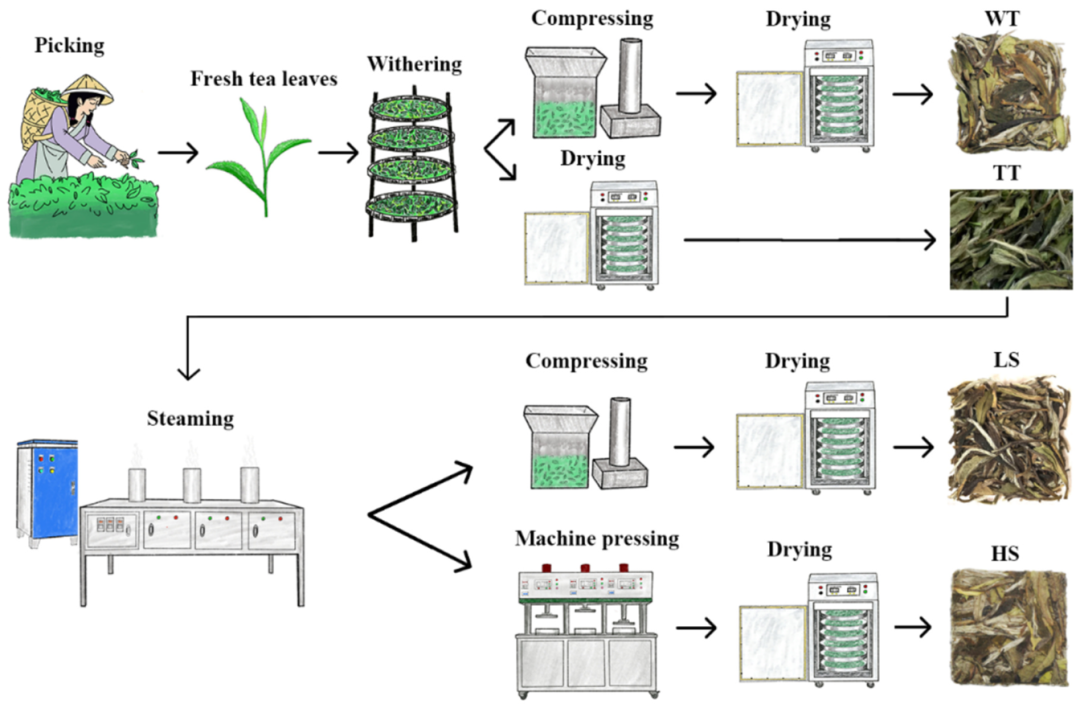
The results showed that traditional loose White Peony (dried at 80°C for 2 hours to a moisture content <7%) exhibited the most authentic aroma characteristics, dominated by grassy and downy notes. The other three compression methods altered the tea’s flavor.
Among the compressed samples, White Peony cakes made by directly compressing withered leaves at 15kPa (then dried to <7% moisture) outperformed the two steam-compressed versions. They had stronger and longer-lasting downy, floral, and fruity aromas, with more prominent freshness, sweetness, and downy taste. Additionally, these directly compressed cakes had the lowest bitterness.
In contrast, the two steam-compressed cakes—steamed at 100°C for 150 seconds then lightly compressed (15kPa) or heavily compressed (60kPa)—showed a significant reduction in freshness, sweetness, and downy taste. The steam-heavy compressed cakes had the strongest bitterness, with freshness and downy taste at their lowest. However, they excelled in sweet aroma and had a much richer, thicker liquor than the other compressed cakes and traditional loose tea.
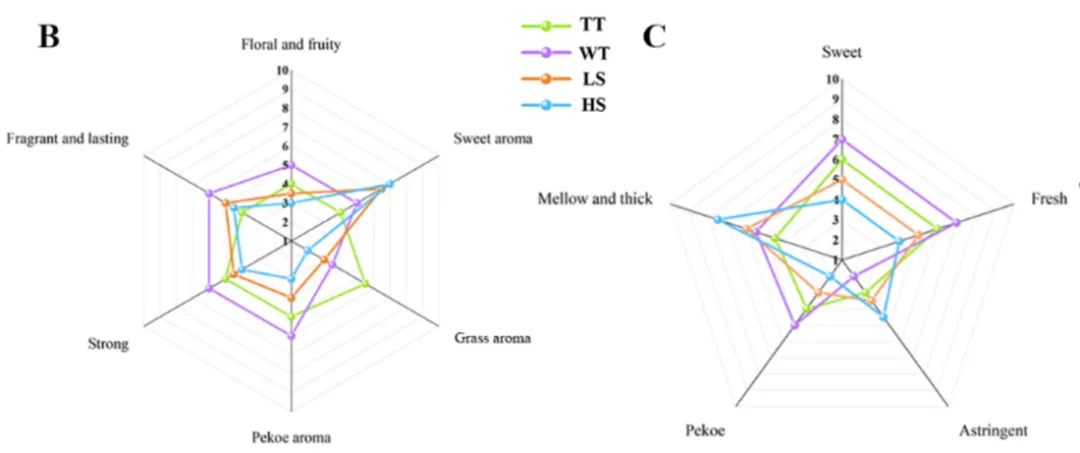
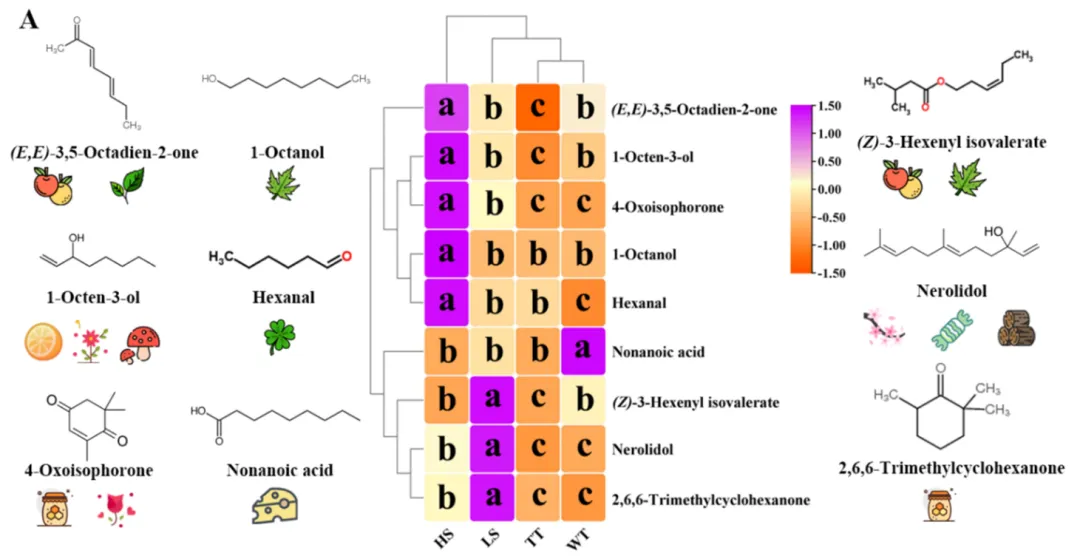
The study identified 74 volatile compounds. Traditional steam-compressed cakes lost a large amount of low-boiling-point aromas due to the combined effect of heat and moisture. This explains why steam-compressed cakes had more obvious sweet aromas but significantly weaker floral, fruity, and fresh notes. In contrast, directly compressed White Peony cakes retained 9 key volatile substances, including nonanoic acid and 1-octen-3-ol. These not only gave the cakes layered aromas like orange blossom and fruit but also enhanced aroma longevity.
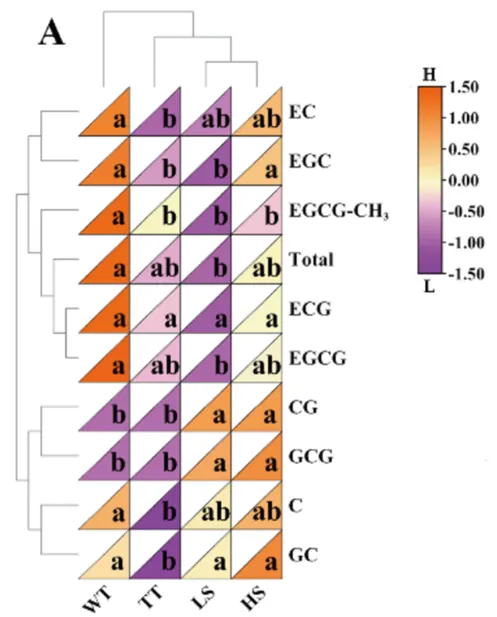
Beyond aromatic compounds, major components such as catechins, amino acids, and soluble sugars also varied. Compared to traditional loose tea (with a catechin content of 111.01 mg/g), directly compressed cakes had a significantly higher catechin content of 132.68 mg/g, followed by steam-heavy compressed cakes (117.22 mg/g). Steam-light compressed cakes had the lowest catechin content at 106.00 mg/g. The order of total catechin content (from highest to lowest) was: direct compression > steam-heavy compression > loose tea > steam-light compression.
Researchers attributed this to the direct compression method reducing the impact of high temperature and mechanical force, thus preserving more active ingredients like catechins. Steaming and heavy compression, however, promoted catechin oxidation.
Directly compressed cakes also had the highest total amino acid content (including histidine, lysine, and theanine), endowing the liquor with exceptional freshness. The heat and moisture from steaming degraded amino acids, leading to a noticeable decrease in freshness in steam-compressed cakes.
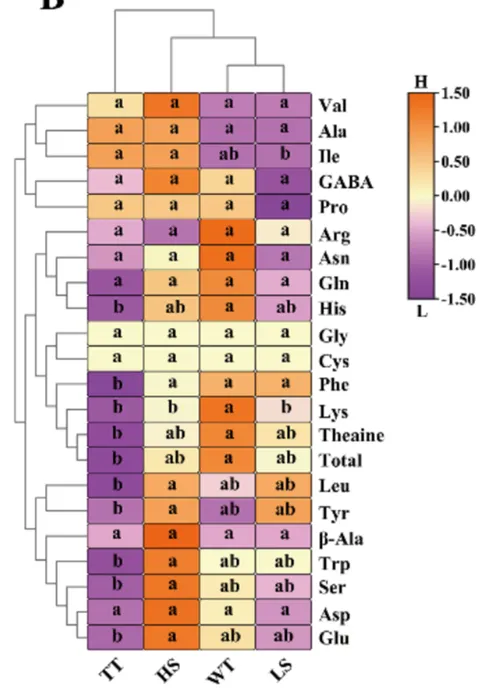
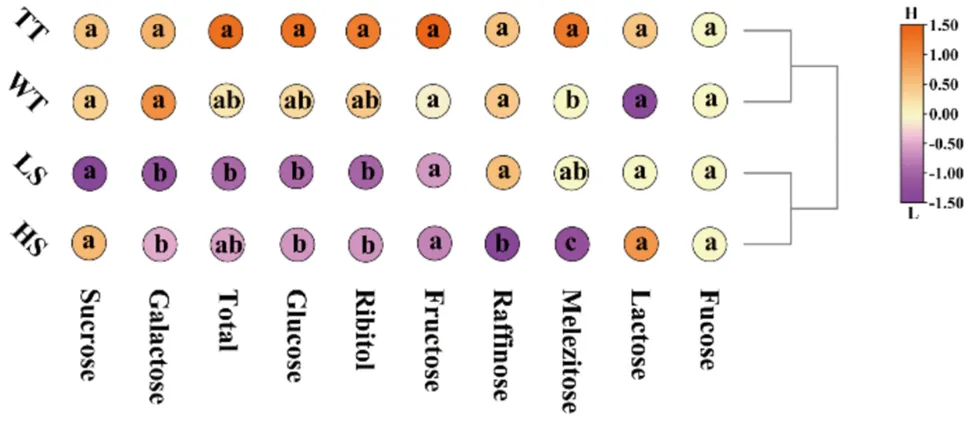
In terms of soluble sugars, directly compressed cakes performed the best. Their fructose content reached 12.06 mg/g—far higher than steam-light (0.78 mg/g) and steam-heavy (1.02 mg/g) compressed cakes—resulting in a distinct sweetness.
After exploring these details, it’s clear that traditional loose white tea, directly compressed cakes, and steam-compressed cakes (light or heavy) have significant flavor differences. Which one do you prefer? Feel free to share your thoughts in the comments.