
How to Brew White Tea Cake Dimple: Unlock the Perfect Flavor of Compact Tea Cakes
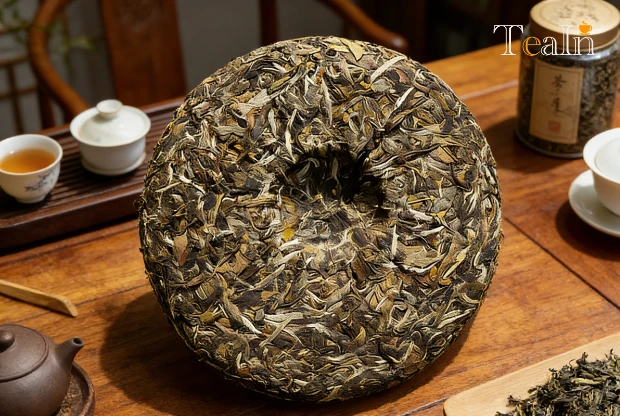
White tea cakes are a favorite among tea lovers for their ease of storage and aging potential. However, brewing the "dimple"—the concave area at the center of the cake’s back—often proves tricky. Formed during pressing when the mold’s protruding center applies greater pressure, this dimple is denser and more compact than other parts of the cake. Improper brewing can result in overly strong flavor, uneven steeping, or even injury while prying. In reality, by mastering prying and brewing techniques tailored to the dimple’s unique properties, you can fully release its mellow flavor. Combining the principles of white tea cake pressing and practical experience, this article details the correct brewing method for white tea cake dimples from four dimensions: dimple characteristics, prying techniques, brewing steps, and common mistakes, helping tea lovers easily handle this special section.
I. Formation and Core Characteristics of the Dimple
The dimple in white tea cakes originates from the physical properties of the pressing process. During the steaming and pressing of Fuding white tea cakes, the mold’s protruding center exerts significantly more pressure on the dimple area, compressing tea leaves more tightly and resulting in higher density. This characteristic directly impacts brewing outcomes and is the key reason for requiring special treatment.
Structurally, the cell walls of tea leaves in the dimple are more broken down, making it easier for internal substances (such as tea polyphenols, flavonoids, and aromatic compounds) to leach out. Following regular brewing rhythms can lead to excessive and rapid release of these substances, resulting in a bitter taste. Meanwhile, the compact structure slows water penetration. Improper prying or insufficient water temperature can lead to weak flavor and under-extraction. Additionally, the weight of tea leaves from the dimple is approximately 1.2 to 1.5 times that of leaves from the edge for the same volume. Adding tea by volume alone will cause excessive concentration, a detail that requires careful adjustment during brewing.
II. Correct Prying Techniques for the Dimple
Prying the cake is the foundation for brewing the dimple. The right method avoids excessive broken tea, prevents injury, and preserves intact tea strips for even steeping later.
1. Tool Selection
Prefer a flat tea knife or tea pick. The flat blade can better slide into gaps between tea leaves, minimizing damage. Avoid sharp, thin tea picks, as they tend to pierce vertically, causing tea leaves to shatter and posing safety risks.
2. Prying Steps
- Place the tea cake flat and locate the junction between the dimple edge and the main cake body. This area has more visible gaps, making it the best entry point for the tea knife.
- Hold the tea knife at a 15-30° angle to the cake and insert it gently into the gap. Do not apply excessive force. Once the blade is fully embedded, lift it slowly to separate the tea leaves into flakes along their natural texture.
- Continue prying around the dimple edge gradually. Control the amount of tea per pry to 3-5 grams (a single serving), avoiding large-scale prying that leads to accumulated broken tea.
- After prying, gently break apart the tea leaves, removing fine dust and retaining intact strips to ensure even water penetration during brewing.
3. Safety and Detail Tips
Keep hands away from the tea knife’s landing area to avoid cuts if it slips. If the dimple is overly compact, wrap the cake in a clean towel and tap the dimple edge lightly to loosen gaps before prying. Never use brute force.
III. Core Brewing Steps and Techniques for the Dimple
Given the dimple’s high density and easy leaching of internal substances, precise adjustments to tea quantity, water temperature, and steeping time are essential to balance flavor concentration and taste layers.
1. Precise Control of Tea Quantity
Due to the dimple’s high density and weight, measure tea by weight rather than volume. The standard brewing amount for white tea cakes is 3-5 grams per 110ml of water, but reduce this by 10%-20% for dimple tea:
- Gaiwan brewing: Use 2.5-4 grams for a 110ml gaiwan to avoid excessive strength.
- Simmering: Use 8-10 grams for 500ml of water. For pure dimple tea, reduce to 7-9 grams.
- Reference standard: Cover the bottom 1/3 of the gaiwan with dry tea without piling, ensuring enough space for leaves to expand during brewing.
2. Water Temperature and Utensil Selection
- Water temperature: Use boiling water (100℃). High temperature quickly penetrates the compact tea structure, promoting even release of internal substances. Using warm water (85-90℃) makes it difficult to penetrate the dimple’s depth, resulting in weak early steeps and suddenly strong later ones.
- Utensils: A gaiwan (110-150ml) is preferred for its ability to pour tea quickly and control brewing time flexibly. A purple clay teapot is also suitable, offering good heat retention and moderate breathability for those seeking a mellow taste. Simmering works best for aged white tea cake dimples stored for over 3 years, fully releasing jujube and medicinal aromas.
3. Rinsing and Steeping Rhythm
- Rinsing is essential: The compact dimple may trap small amounts of dust from pressing, and rinsing awakens dormant internal substances. Pour boiling water over the tea for the first 1-2 steeps and discard immediately. Limit rinsing to 5-10 seconds to avoid premature loss of flavor.
- Steeping time: Start drinking from the third steep after rinsing. Steep the first 3 batches quickly (5-10 seconds each) to capture the fresh aroma, leveraging the broken cell walls of the dimple. Extend to 15-20 seconds for the 4th-6th steeps, as leaves are fully expanded and releasing substances steadily. For steeps 7 and beyond, gradually extend to 30 seconds to 1 minute until flavor fades.
4. Re-steeping and Flavor Enhancement Tips
- Maintain boiling water for re-steeping. Drain the tea completely each time to prevent residual strong tea from affecting the next batch.
- For a warmer taste, use the "residue retention method" after the 5th steep: Leave 1/5 of the tea in the pot before adding fresh water for a smoother flavor transition.
- For aged white tea cake dimples stored over 5 years, add 1-2 pieces of dried tangerine peel or a few red dates while simmering. These complement the dimple’s mellow medicinal and jujube aromas, enriching flavor layers.
IV. Common Brewing Mistakes and How to Avoid Them
- Mistake 1: Measuring tea by volume, ignoring the dimple’s density. Dimple tea is heavier, so volume-based measurement leads to excessive concentration and bitterness. Use weight as the standard and reduce the amount.
- Mistake 2: Steeping too slowly, waiting for leaves to "open up." Internal substances in the dimple leach easily; slow steeping causes over-release of tea polyphenols. Follow the "quick steeping" principle, especially for early batches.
- Mistake 3: Using low-temperature water for a "softer taste." Low temperature fails to penetrate the compact structure, resulting in uneven steeping. Boiling water is key to unlocking the dimple’s flavor and will not cause bitterness when the tea quantity is correct.
- Mistake 4: Inserting the tea knife vertically while prying. Vertical force shatters tea leaves, producing excessive dust and affecting brewing clarity. Keep the knife at an angle and pry along the natural texture.
Summary
This article focuses on the correct brewing method for white tea cake dimples, with core adjustments tailored to its characteristics of "compactness, high density, and easy leaching of internal substances." It first explains the dimple’s formation and structural features, laying the foundation for subsequent techniques. Next, it details the correct prying method using a flat tea knife at an angle to separate leaves into flakes, avoiding broken tea and injury. Core brewing steps emphasize "reducing tea quantity by 10%-20%, using boiling water, quick rinsing for the first two steeps, and 5-10 second steeps for the first three batches," providing specific ratios for gaiwan and simmering methods. Finally, it highlights common mistakes such as excessive tea quantity and slow steeping. The article emphasizes that by adapting to the dimple’s physical properties through precise prying and brewing adjustments, you can fully release its mellow flavor, allowing tea lovers to easily master this special section.