
How to Pry a White Tea Cake: A Complete Guide to Avoid Broken Tea and Flavor Loss
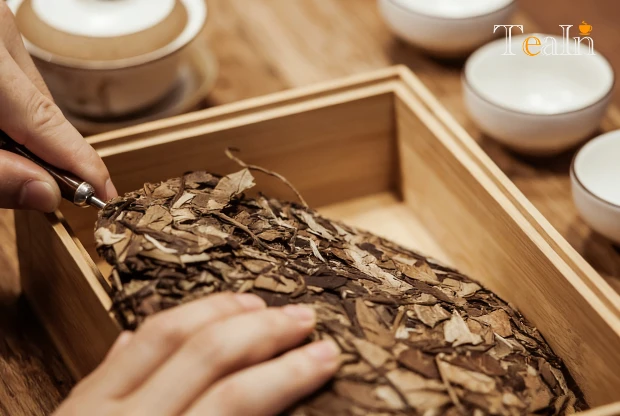
Prying a white tea cake is a crucial preliminary step in tasting white tea. It may seem simple, but it requires skill. Improper methods not only cause tea leaves to break and risk injury but also damage the integrity of tea strips. This affects the evenness of steeping, resulting in either weak or bitter tea. More importantly, incorrect prying and storage can hinder the tea’s subsequent aging process. Combining the pressing characteristics of white tea cakes and practical experience, this article details how to scientifically pry a white tea cake from four dimensions—tool selection, step-by-step techniques, storage essentials, and common mistakes—helping tea lovers easily unlock the authentic flavor of white tea.
I. Choosing Prying Tools: The Right Tool Makes All the Difference
The right tool simplifies prying significantly, with the core principles of "easy insertion, minimal breakage, and safety." Among mainstream tools, a tea knife is the top choice, while a tea pick should be used cautiously.
1. Preferred Tool: Tea Knife (Flat/Willow-Leaf Shape)
A tea knife, especially a flat tea knife or willow-leaf tea knife, is ideal for prying white tea cakes. Its wide, flat blade fits well into gaps between tea leaves, distributing force evenly to pry leaves into flakes while preserving strip integrity. Flat tea knives suit tightly pressed aged white tea cakes, while willow-leaf tea knives adapt to moderately pressed new cakes, minimizing damage to leaves during use.
High-quality tea knives are made of stainless steel or brass, with sharp yet non-pointed blades and non-slip handles. No brute force is needed—leveraging the blade’s fit allows easy separation of leaves, making it much safer than a tea pick.
2. Alternative Tool: Tea Pick (Only for Loosely Pressed Cakes)
Tea picks are slender with pointed tips, better for inserting into gaps of loosely pressed cakes, but they have obvious drawbacks. They tend to pierce vertically, shattering leaves into dust that makes tea cloudy and bitter when steeped. If using a tea pick, choose a blunt-tipped one and limit use to loosely pressed new white tea cakes. Operate gently, inserting slowly without force.
3. Tools to Avoid
Never use household knives like scissors or kitchen knives. Their overly wide or sharp blades easily chop leaves and pose safety risks. Avoid sharp objects like toothpicks or iron nails—they not only risk injury but also contaminate tea, compromising drinking safety.
II. Step-by-Step Prying Techniques: Gentle, Precise, and Stable for Intact Flakes
The core of prying is "following the grain, finding gaps, inserting horizontally, and applying force slowly." Whether for tightly or loosely pressed cakes, follow these steps to preserve tea strip integrity.
1. Preparation: Observe the Cake and Locate Entry Points
Place the white tea cake flat on a clean tea tray. Rotate it gently to check its pressing grain and gaps. White tea cakes form natural layered structures during pressing, with edges and areas around the dimple on the back typically having the most visible gaps—ideal entry points.
For tightly pressed aged white tea cakes, wrap the cake in a clean towel and tap the edges and sides lightly to loosen the leaves, facilitating tool insertion. Loosely pressed cakes require no this step; simply find gaps directly.
2. Core Operation: Insert Horizontally and Pry Slowly
Hold the tea knife at a 15-20° angle to the cake’s surface. Insert it horizontally into the selected gap, about 1-2 centimeters deep, ensuring the blade fits fully along the leaf layers. Avoid vertical insertion.
Once the knife is firmly embedded, use your wrist as a fulcrum to lift slowly. Leverage the principle of leverage to separate leaves along the grain, aiming for 3-5 gram flakes (a single serving). Avoid large-scale prying that accumulates broken tea.
For dense areas like the dimple, pry gradually around the edge. Start with looser areas and work toward the center. Never pry directly at the center with force.
During operation, keep hands away from the blade’s path, maintaining a stable posture to prevent slips and injury.
3. Post-Prying Handling: Arrange Leaves and Remove Dust
Gently break apart the flaked tea after prying. Sort out fine dust with your fingers and discard it. Intact tea strips ensure even water penetration during steeping, allowing gradual release of internal substances for a smooth, mellow brew. Divide the sorted tea into single-serve portions in small sealed bags for easy access later.
III. Storage Essentials After Prying: Pry Only What You Need to Preserve Aging
Storage after prying is just as important as the prying itself. Incorrect storage causes tea to absorb moisture and undergo photo-oxidation, directly damaging its aging potential.
1. Core Principle: Pry Only What You Need, Keep the Rest Intact
White tea’s aging relies on the synergy of its entire structure. Storing the cake intact maintains stable internal temperature and humidity, enabling uniform component transformation. Therefore, pry only 1-2 weeks’ worth of tea at a time. Keep the remaining cake intact for storage.
2. Storing the Remaining Cake
Wrap the intact cake in a dedicated tea sealed bag or aluminum foil bag. Squeeze out air and seal tightly to prevent air and moisture intrusion.
Store the sealed cake in a dry, well-ventilated, dark, and odorless environment. Keep it away from high-humidity areas like kitchens and bathrooms, as well as direct sunlight or places with large temperature fluctuations.
For long-term storage, place the sealed bag inside a purple clay jar or ceramic jar to further isolate external interference, providing a stable environment for the tea’s aging.
3. Short-Term Storage for Pried Tea
Store pried flaked tea in food-grade sealed bags or small tin cans. Seal tightly and keep in a cool, dry place. Consume it within 3-5 days to avoid flavor loss or moisture absorption from excessive air exposure.
IV. Common Prying Mistakes: Avoid These to Stay on Track
1. Mistake 1: Using Brute Force—Causes Broken Tea
Many tea lovers apply excessive force when prying tightly pressed cakes, breaking tea cell walls and creating large amounts of dust. Instead, use the tool’s fit and leverage to separate leaves gradually along the grain. Loosen dense areas first before prying.
2. Mistake 2: Inserting Tools Vertically—Damages Strips
Vertical insertion with a tea pick or knife is the main cause of broken tea. Always insert tools at an angle, following the cake’s layered direction to pry intact flakes.
3. Mistake 3: Prying the Entire Cake for Long-Term Storage
Some tea lovers pry the entire cake into pieces and store them in jars for convenience. This deprives the tea of proper aging conditions, making it prone to moisture and oxidation, which spoils the flavor. Even for daily use, adhere to "pry in batches and store sealed."
4. Mistake 4: Neglecting Tool Cleaning—Contaminates Tea
Rinse tools with boiling water and dry them before use to avoid oil or dust on the tool contaminating the tea. Especially for long-unused tea knives, clean and dry thoroughly to ensure no odor before touching the tea.
Summary
This article details how to pry a white tea cake effectively. Key points include: prioritizing flat or willow-leaf tea knives (tea picks are only for loosely pressed cakes); following the "find gaps, insert horizontally, apply force slowly" principle to pry flakes at a 15-20° angle, minimizing broken tea; adhering to "pry only what you need" for storage, keeping the remaining cake sealed in a dry, well-ventilated environment to preserve aging potential; and avoiding common mistakes like brute force, vertical insertion, and long-term storage of fully pried cakes. Proper prying not only preserves tea strip integrity for even steeping but also protects the tea’s aging potential, making it a crucial step to unlocking the authentic flavor of white tea.