
Is It Safe to Drink Tea and Coffee Together?

Many people face a common dilemma in daily life: they rely on a cup of black coffee to boost energy in the morning, yet wonder if sipping a cup of tea to calm the nerves in the afternoon might irritate their body. No need to worry. These two globally popular beverages can not only be enjoyed together but also deliver health benefits greater than the sum of their parts when consumed in a scientifically balanced way. Multiple large-scale epidemiological studies have confirmed that reasonable consumption of tea and coffee together is linked to longevity, making it a simple and effective wellness practice.
I. Scientific Evidence: Research Backing the Health Benefits of Combined Consumption
The synergistic health effects of tea and coffee are not just subjective feelings but are supported by solid scientific data.
A study published in the British Journal of Nutrition, which followed over 180,000 people for 13 years, found that when total daily fluid intake reaches 7-8 cups (each cup being 240 milliliters), replacing some water with 3 cups of tea and 2 cups of coffee yields significant health benefits. Compared to those who only drink plain water, this combination reduces all-cause mortality by 45%, cancer-related mortality by 41%, and mortality from cardiovascular, respiratory, and digestive diseases by 31%, 72%, and 65% respectively, providing comprehensive health protection.
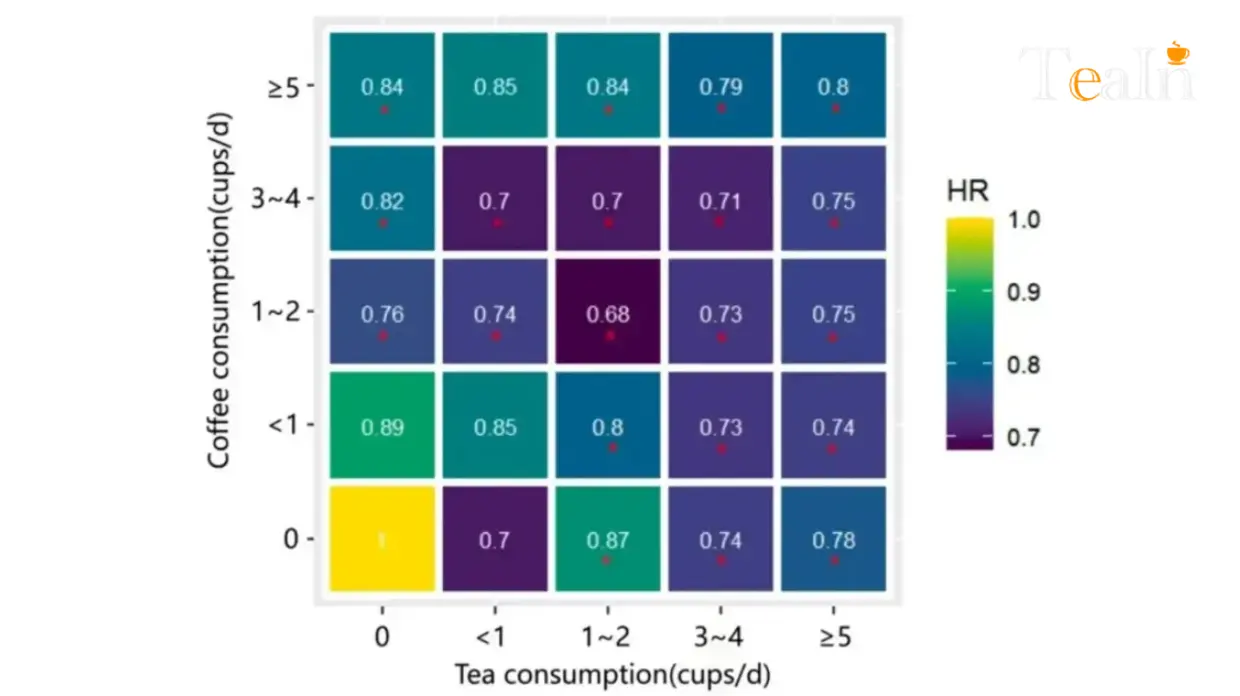
Similarly, a study by Tianjin Medical University in China involving nearly 500,000 people reached similar conclusions. Individuals who drank 2-4 cups of tea plus 1-2 cups of coffee daily experienced a 22% reduction in all-cause mortality, a 24% reduction in cardiovascular disease mortality, and a 31% reduction in respiratory disease mortality. These results outperform those of drinking tea or coffee alone, and are far better than consuming neither.

The positive findings of these studies stem from the complementary nutritional profiles of tea and coffee. Coffee is rich in caffeine and chlorogenic acid, while tea contains active compounds like tea polyphenols and theanine. These ingredients work synergistically to enhance antioxidant and anti-inflammatory effects, while minimizing potential side effects from excessive consumption of a single beverage, creating a powerful health synergy.
II. Guide to Healthy Combined Consumption: Ratio, Quantity, and Methods
To maximize the benefits of drinking tea and coffee together, the key lies in "scientific pairing" rather than casual consumption.
1. Golden Ratio and Total Intake Control
Research clearly recommends a golden ratio of 3:2 for tea to coffee (each cup 240 milliliters). Additionally, total daily fluid intake (including tea, coffee, and plain water) must reach 7-8 cups to ensure health benefits.
If total fluid intake is less than 4 cups, even with tea and coffee, significant effects are unlikely. Conversely, exceeding 9 cups of total fluids—with minimal plain water and excessive tea or coffee—may not only lead to "hidden dehydration" due to frequent urination but also increase the risk of cardiovascular diseases, which is not worth the cost.
2. Preferred Consumption Methods
Opt for plain tea and black coffee without added sugar or milk. Excess sugar and trans fats can burden the body’s metabolism, offsetting the inherent health value of tea and coffee. If you find the taste bitter, add a small amount of pure milk for flavor instead of non-dairy creamers, syrups, or other additives.
For tea, prioritize green tea and oolong tea, as these varieties have higher tea polyphenol content and stronger antioxidant capacity. For coffee, choose Americanos or black coffee, avoiding high-sugar and high-fat ingredients in specialty coffees.
III. Multiple Health Benefits: Beyond Longevity
In addition to reducing mortality rates, combining tea and coffee offers numerous other health surprises, covering anti-aging, heart protection, brain health, and more.
1. Anti-Aging: Delaying Physical and Cognitive Decline
A study by Sichuan University in China confirmed that drinking 3 cups of tea daily (about 6-8 grams of tea leaves) can slow biological aging. Research in the Journal of Nutrition showed that elderly individuals who drank 1-2 cups of green tea daily experienced a 23% reduction in oxidative stress markers and an 18% slowdown in cognitive decline. Coffee also has anti-aging properties: a study in the Journal of Cosmetic Dermatology found that daily consumption of black coffee reduces the risk of facial aging by 15%. A follow-up study in the American Journal of Clinical Nutrition indicated that drinking 2-3 cups of black coffee daily lowers the incidence of Alzheimer’s disease by 32% and reduces cognitive decline by 28%. Combining the two amplifies antioxidant effects, better defending against age-related damage.
2. Heart and Brain Protection: Reducing Risks of Multiple Diseases
A study involving 170,000 people published in the Journal of Clinical Endocrinology & Metabolism showed that individuals who drank 5 cups of tea daily reduced their risk of cardiometabolic diseases by 39.7%, while those who drank 3 cups of coffee daily reduced their risk by 48.1%. A joint study by Tianjin Medical University in China and Yale University also found that drinking 2-3 cups of tea or coffee daily reduces the risk of ischemic stroke and vascular dementia by 32%, with an even more significant reduction when consumed together, providing dual protection for cardiovascular and brain health.
3. Inhibiting Osteoporosis: Safeguarding Bone Health
A domestic study involving nearly 490,000 people demonstrated that drinking 3-4 cups of tea or 1-2 cups of coffee daily (each cup 250 milliliters) reduces the risk of osteoporosis by 15% and 10% respectively. More surprisingly, the combined effect is doubled: individuals who drank 1-2 cups of tea plus 1-2 cups of coffee daily reduced their osteoporosis risk by 32%, showing an ideal health synergy. This result dispels the one-sided perception that "coffee causes calcium loss," with the key lying in "moderation" and "pairing."
IV. Precautions: Cases to Exercise Caution
While combining tea and coffee is beneficial, it is not suitable for everyone, and certain pitfalls should be avoided.
First, avoid drinking on an empty stomach. Caffeine in coffee and tea may irritate the gastric mucosa, leading to discomfort, especially for those with sensitive stomachs. It is advisable to drink them after breakfast or lunch.
Second, control the timing of consumption. Minimize intake after 3 PM to prevent caffeine from disrupting sleep quality, as long-term sleep deprivation can offset health benefits.
Finally, consider individual differences. Special populations such as pregnant women, lactating women, people with hypertension, and those with anxiety disorders should adjust their intake based on professional advice to avoid excessive caffeine burden. Additionally, individuals allergic to tea or coffee should avoid them entirely.
V. Practical Pairing Suggestions: Adapting to Daily Scenarios
Choosing the right tea and coffee pairing for different scenarios makes it easier to maintain healthy habits.
- Work breaks: An Americano paired with a cup of green tea. Coffee provides a quick energy boost, while theanine in green tea relieves potential anxiety from coffee, helping to focus and improve work efficiency.
- Afternoon relaxation: A black coffee paired with a cup of oolong tea. The rich aroma of oolong tea neutralizes the bitterness of coffee, creating a milder taste that is perfect for relieving afternoon drowsiness.
- Weekend leisure: A pot of white tea paired with a pour-over black coffee. White tea has a gentle nature, and coffee offers a rich aroma. This combination not only delivers layered flavors but also provides gentle nourishment for the body.
Summary
This article addresses the core question "Is it safe to drink tea and coffee together?" Drawing on multiple large-scale scientific studies, it confirms that reasonable combined consumption of tea and coffee is not only safe but also delivers significant health benefits. The article details the scientific basis for combined consumption, including reducing all-cause and disease-specific mortality, anti-aging effects, heart and brain protection, and inhibiting osteoporosis. It specifies the "3:2" golden ratio, the requirement of 7-8 cups of total daily fluid intake, and preferred plain consumption methods. It also highlights precautions such as avoiding empty stomach and late-afternoon consumption, and provides practical pairing suggestions for daily scenarios. The core conclusion is that the nutritional components of tea and coffee can create a synergistic effect. When consumed in a scientifically balanced and moderate way, they form a simple and efficient wellness choice suitable for integration into daily diet, safeguarding health.