
Why Is Aged Shoumei Darker Than Bai Mudan of the Same Vintage?
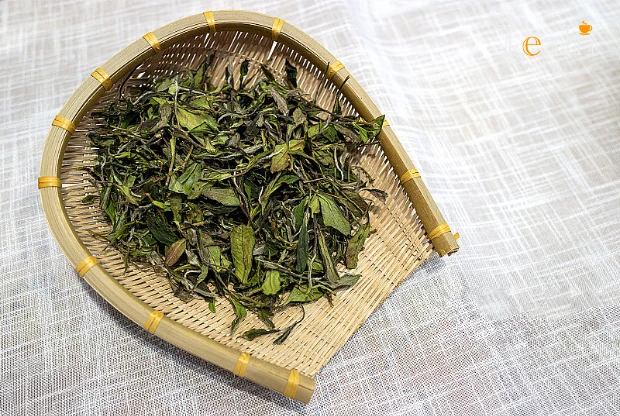
A common observation among white tea enthusiasts is that aged Shoumei and Bai Mudan of the same vintage will always see the former darker than the latter. High-vintage aged Shoumei is mostly deep brown, interspersed with layers of bronze, yellow, and pale cyan. In contrast, high-vintage Bai Mudan is based on dark green and pale yellow, with the characteristic silver-gray of tea buds, rarely showing the deep brown of Shoumei. This color difference is not a criterion for judging quality, but is jointly determined by the raw material characteristics, growing environment, and aging mechanism of the two.
The difference in raw material morphology is one of the core reasons. Bai Mudan is picked according to the standard of one bud with two or three leaves, with tender buds and leaves and a high proportion of buds. The surface of the buds and leaves is covered with fine white down. These white hairs are rich in keratin and wax, which can play a certain "protective role" during the aging process, slowing down the oxidation rate of substances inside the leaves. At the same time, the silver-gray color of the white down itself will continue to appear, keeping Bai Mudan with a relatively light overall color. Shoumei, however, has a looser picking standard, mainly mature large leaves with obvious tea stems. Mature leaves have thicker cell walls, and tea stems are rich in lignin and fiber. These structures are more prone to oxidation reactions during aging, leading to darker colors.
The difference in the content of pigment substances in the leaves further amplifies the color distinction. Shoumei's picking period is usually longer than that of Bai Mudan, and it receives more sufficient light during its growth cycle. Adequate light promotes the synthesis of tea polyphenols in tea leaves. During aging, tea polyphenols will gradually convert into theaflavins, thearubigins, and theabrownins—three substances that are key to determining the color of white tea. Shoumei has a higher base of tea polyphenols, and the content of theabrownins (the darkest pigment) produced after conversion is much higher than that of Bai Mudan, so it presents a deep brown color after aging. Due to its tender buds and leaves, Bai Mudan has a relatively low content of tea polyphenols, and the presence of white down inhibits some oxidation reactions, resulting in less theabrownin production and a naturally lighter color.
There are also differences in the rhythm of material transformation during aging. The natural aging of white tea is a slow oxidation and transformation process that requires a dry, dark, and sealed environment. Bai Mudan's tender buds and leaves are rich in amino acids, soluble sugars, and other substances. These substances interact with tea polyphenols to slow down the darkening rate of pigments, allowing it to retain more greenish undertones during aging. In Shoumei's leaves and tea stems, lignin, cellulose, and other substances account for a higher proportion. The oxidation and decomposition of these substances are faster, which accelerates pigment precipitation, making Shoumei darker and more intense in color within the same aging period.
It is particularly important to note that the depth of color cannot be used as a basis for judging the quality of aged white tea. With its tender buds and leaves and abundant white down, Bai Mudan has a fresh aroma and sweet taste after aging. Shoumei, due to the presence of mature leaves and tea stems, is more likely to precipitate mellow pectin and soluble sugars after aging, with a warm and smooth taste, each having unique flavors. Whether it is deep brown Shoumei or light green with silver-gray Bai Mudan, as long as the aging environment is suitable and there is no musty odor, it is a normal performance in line with its category characteristics.
Understanding the color difference between aged Shoumei and Bai Mudan can help us more accurately recognize the category characteristics of white tea. The difference in the appearance of different white tea categories is a natural result of the combined effect of raw materials, growth, and aging, rather than an absolute indicator of quality. To appreciate the charm of white tea, we should not only pay attention to the natural evolution of its color but also taste the unique charm of its aroma and taste, so as to truly appreciate the essence of white tea being "more fragrant as it ages".
Summary
This article focuses on the core phenomenon that "aged Shoumei is darker than Bai Mudan of the same vintage" and analyzes the key reasons behind it: first, the difference in raw material morphology, with Bai Mudan having tender buds and leaves rich in white down, and Shoumei mainly consisting of mature large leaves and tea stems; second, the difference in the content of pigment substances, as Shoumei has a higher base of tea polyphenols due to sufficient light, resulting in more theabrownin production after aging; third, the difference in the rhythm of material transformation during aging, as the lignin and cellulose in Shoumei oxidize faster, accelerating color precipitation. The article emphasizes that the depth of color is not a criterion for judging the quality of white tea. Due to the different raw material characteristics, the two show different flavor characteristics after aging, each with its unique value.