
Why Is Compressed White Tea Thicker in Taste Than Loose Leaf Tea of the Same Type?
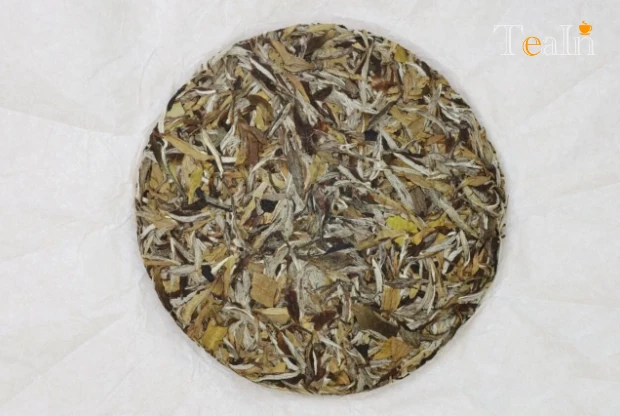
For white tea of the same type and vintage, compressed tea (bingcha) always tastes richer and thicker than loose leaf tea—an experience shared by many tea lovers. This difference does not stem from raw materials or quality, but mainly from processing techniques, combined with the impact of aging, ultimately creating the divergence in taste.
I. Core Reason: High-Temperature Steaming and Pressing Break Cell Walls
Compressed tea undergoes an additional "high-temperature steaming and pressing" process based on loose leaf tea, which is the key to its thick taste. The high temperature and pressure during pressing cause slight deformation or even rupture of tea leaf cell walls. Substances such as tea polyphenols, amino acids, and polysaccharides originally enclosed in cells can leach out more quickly and fully during brewing, making the tea liquor richer, smoother, and naturally thicker. In contrast, loose leaf tea is not steamed or pressed, so its cell walls remain intact, and substances leach at a relatively gentle pace, resulting in a fresher and lighter taste.
II. Substance Fusion: Steaming and Pressing Promote Interaction of Flavor Compounds
During high-temperature steaming and pressing, tea leaves and stems are tightly bonded. This not only fixes their shape but also promotes mild fusion of flavor substances from different parts. Loose leaf tea has a loose structure, with substances in each part remaining relatively independent. Compressed tea, however, allows sugars, pectin, and other substances to penetrate better through steaming and pressing, enhancing the smoothness and layering of the tea liquor during brewing and further strengthening the "thick" taste experience.
III. Aging Impact: Compressed Tea’s Structure Aids Material Transformation
In terms of aging, the dense structure of compressed tea creates a more stable internal environment, enabling more concentrated and uniform transformation of substances in the tea. After long-term storage, the bitter substances in compressed tea are more fully transformed, the flavors of polysaccharides and amino acids are more prominent, and the taste becomes increasingly mellow. Loose leaf tea, with a larger contact area with air during storage, undergoes relatively scattered material transformation, maintaining a fresh taste and making it difficult to form the thickness of compressed tea.
IV. No Superiority or Inferiority: Choose Based on Needs
There is no absolute good or bad between compressed tea and loose leaf tea. Loose leaf tea has an intact shape, natural and fresh aroma, and is easy to brew, suitable for those who prefer a crisp taste. Compressed tea has a thick taste, excellent aging potential, and saves space during storage, suitable for tea lovers who enjoy mellow flavors or long-term collection. The core of choice lies in personal taste preferences, not quality.
Summary
This article focuses on the phenomenon that "compressed white tea is thicker in taste than loose leaf tea of the same type," and analyzes the core reasons: first, the high-temperature steaming and pressing process of compressed tea breaks the tea leaf cell walls, allowing flavor substances to leach more easily; second, steaming and pressing promote material fusion, improving the smoothness of the tea liquor; third, the dense structure of compressed tea facilitates aging, further enhancing the thick taste. The article also points out that the two only differ in flavor characteristics, with no distinction in quality, and can be chosen according to personal preferences.