
Why Is There a Layer of Oil Mist on Aged White Tea?
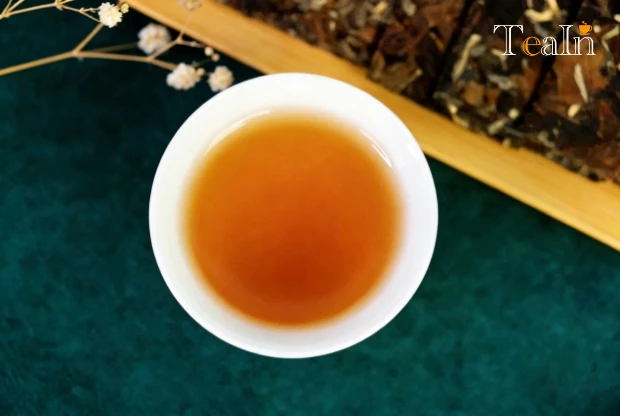
When we brew aged white tea, we all notice a very interesting phenomenon: a thin layer of white "oil mist" floats on the surface of the hot tea just poured out. When we blow on it gently, it scatters in all directions, appearing and disappearing, and changing shape.
This mysterious "oil mist" is "Cha Yun" (a natural phenomenon formed by tea extracts), a normal phenomenon in aged white tea, and it is not an impurity. "Cha Yun" is caused by factors such as the internal substances of the tea leaves and the brewing temperature. Some tea lovers regard "Cha Yun" as the only criterion for judging the quality of tea, but this is actually a mistaken understanding.
Below, I will combine the biological characteristics of tea leaves and phenomena observed in practice to explain the truth of Cha Yun from four dimensions: definition analysis, formation mechanism, influencing factors, and cognitive misconceptions, so as to help everyone understand this phenomenon.
1. What is Cha Yun
Cha Yun is a thin, semi-transparent "mist-like film" floating on the surface of the tea liquor. It often appears in aged teas such as aged white tea and Pu'er that are brewed or boiled at high temperatures. It is not real "oil", but a visual phenomenon produced by the interaction between natural substances in tea and water vapor. Cha Yun disperses very easily, and it does not affect the taste of the tea liquor or human health. In appearance, Cha Yun is mostly white or pale yellow. Under sunlight, it gives off a slight luster and gradually dissipates as the tea liquor cools. Among various types of tea, the Cha Yun of aged white tea is especially obvious, and this has become a major characteristic of boiling and drinking aged white tea. This characteristic of aged white tea is because its tea leaves have undergone long-term aging and accumulated rich internal substances.
2. The formation mechanism of Cha Yun
Cha Yun is the result of the combined action of the internal substances of the tea leaves, the brewing temperature, and the environmental conditions; it does not appear by chance. Its main core lies in the combined action of "substance extraction" and "water vapor blocking".
1. Core substances: fat-soluble components and volatile aromatic substances
Tea leaves contain various fat-soluble substances, such as tea saponin, fatty acids, fat-soluble vitamins, and some volatile aromatic components (such as terpenes and aromatic alcohols). These substances are lighter than water; when tea is brewed or boiled at high temperatures, they are extracted into the tea liquor together with water-soluble components, and eventually float to the surface to form a thin "film". In aged white tea that has been aged for more than three years, its internal substances undergo slow transformation, and the content of fat-soluble substances becomes higher than that in new white tea, and their fusion with the tea liquor is more stable, so obvious Cha Yun is more easily formed during boiling and drinking.
2. Key conditions: high temperature and the blocking of water vapor
The appearance of Cha Yun cannot be separated from a high-temperature environment. When we brew with boiling water or boil the tea, the temperature of the tea liquor rises and produces a large amount of water vapor, which should originally dissipate quickly into the air; however, the fat-soluble substances form a "film" on the surface of the tea liquor, which temporarily blocks the escape of water vapor and "holds" the water vapor beneath the film. This "film blocking water vapor" effect makes the film more clearly visible, presenting the form of "oil mist". As the tea liquor gradually cools, the water vapor gradually decreases, the blocking effect weakens, and Cha Yun also slowly dissipates. This is exactly why Cha Yun is most obvious when it is just poured out.
3. Auxiliary factors: the combined effect of tea liquor concentration and surface tension
The concentration of the tea liquor also directly affects the obviousness of Cha Yun. When we boil aged white tea, the internal substances of the tea leaves are fully extracted, and at this time the tea liquor appears thicker and has higher surface tension, which can better support the floating of fat-soluble substances, making Cha Yun easier to form and last longer. Conversely, a weak tea liquor has low surface tension, and Cha Yun is not so obvious.
3. Four key factors affecting the obviousness of Cha Yun
The obviousness of Cha Yun is closely related to the quality of the tea itself, the brewing method, and the environmental conditions, and can be specifically divided into four points:
1. Tea type and aging time
Aged teas such as aged white tea, Pu'er, and aged rock tea have more obvious Cha Yun. Among them, aged Shoumei and aged Gongmei have larger leaves and more stems, so their fat-soluble substance content is higher, and their Cha Yun is more prominent than that of Baihao Yinzhen and Bai Mudan. The longer the aging time of aged white tea, the more complete the transformation of substances, and the easier it is for Cha Yun to appear.
2. Brewing temperature and method
High temperature is the key to the formation of Cha Yun. Brewing or boiling with 100°C boiling water is more likely to produce Cha Yun than using 85–90°C warm water. The boiling method can fully extract the internal substances of the tea leaves, and Cha Yun is more obvious than when brewing in a gaiwan.
3. Environmental temperature and humidity
In a low-temperature and high-humidity environment, the temperature difference on the surface of the tea liquor is more significant, the escape speed of water vapor slows down, and Cha Yun is clearer; conversely, in a high-temperature and dry environment, water vapor escapes quickly, and Cha Yun is relatively weak.
4. Tea quality and the amount of tea used
High-quality aged white tea, because its raw materials are pure and its processing is standardized, has richer fat-soluble substances and aromatic components, so its Cha Yun is relatively natural. In addition, when the amount of tea used is large, the concentration of the tea liquor increases, and Cha Yun is also more obvious. Of course, this is not absolute; if someone adds external oil to inferior tea leaves, a fake "Cha Yun" may also appear. However, this kind of "oil mist" is relatively easy to distinguish, because it is usually sticky and does not disperse easily, and it may also have an off odor.
4. Cognitive misconceptions
Many tea lovers think that "the more obvious the Cha Yun, the better the tea", but this understanding is not particularly accurate. Cha Yun is only a normal physical phenomenon of the tea liquor; it can only indicate that the tea has relatively rich fat-soluble substances and that the brewing temperature is sufficient, but it cannot be used alone as a standard for judging tea quality.
1. Tea with Cha Yun is not necessarily good tea
Some merchants deliberately equate Cha Yun with "high quality" to mislead consumers. In fact, as long as the conditions of "rich internal substances + high-temperature brewing" are met, ordinary aged white tea can also show obvious Cha Yun. If the tea itself has off-flavors, moldy smell, or if the water quality is poor, even if Cha Yun is present, it cannot be called good tea.
2. Tea without Cha Yun is not necessarily poor tea
New white tea, tender Baihao Yinzhen, and the like may not form obvious Cha Yun because their fat-soluble substance content is lower, or because the brewing temperature is slightly lower, but this does not affect their fresh, sweet taste and excellent quality. To judge tea quality, it is necessary to comprehensively evaluate the dry tea appearance, the taste of the tea liquor, the purity of the aroma, the softness of the infused leaves, and other aspects.
3. Be wary of "fake Cha Yun"
In daily life, some unscrupulous merchants add oils or flavorings to tea leaves to create fake "oil mist" in this way. When distinguishing this kind of "fake Cha Yun", we need to see whether it is sticky and not easy to disperse, whether it still does not disappear after the tea liquor cools, and whether it has a pungent off odor. If these phenomena are present, then it is very likely to be "fake Cha Yun", and we need to be careful and avoid drinking it to protect our health.
Summary
This article focuses on the "oil mist" on the surface of aged white tea and explains that the essence of this phenomenon is "Cha Yun" — a normal physical phenomenon formed by the interaction between fat-soluble substances and volatile aromatic components in tea leaves and water vapor when brewed or boiled at high temperatures. The formation of "Cha Yun" depends on three key elements: fat-soluble components such as tea saponin and fatty acids in tea, a high-temperature environment of around 100°C, and the blocking effect on water vapor caused by the film formed by fat-soluble substances. Because aged white tea has richer fat-soluble substances after long-term aging, it is more likely to show Cha Yun when boiled and drunk. The obviousness of Cha Yun is influenced by factors such as tea type, aging time, brewing method, environmental temperature and humidity, and the amount of tea used. It should be noted that Cha Yun is not the only standard for judging tea quality: the presence of Cha Yun does not mean the tea quality is good, and the absence of Cha Yun does not mean the tea quality is poor; we should make a comprehensive judgment based on the dry tea appearance, the taste of the tea liquor, the purity of the aroma, the state of the infused leaves, and so on. At the same time, we must be even more vigilant against "fake Cha Yun" formed by artificially adding external oils or flavorings, so as to avoid being deceived.