
Is White Tea Really "Women's Tea"?
Customers often talk with me about the term "women's tea". This label is always attached to white tea, so much so that many people think it is just a marketing gimmick, another trick of selling tea in pink packaging. This term is not marketing copy concocted by an advertising agency; there is actually some factual basis behind it.
First of all, it needs to be made especially clear that white tea is a beverage, not a medicine. It can provide a certain auxiliary effect in improving the skin, regulating mood, or improving sleep, but it cannot replace medicine. As for its efficacy, this article will not cover it; we will focus on why it is called "women's tea".
What Makes White Tea a Gentle Tea
White tea is widely regarded by tea lovers as the gentlest of the six major tea categories, mainly because its processing involves very few steps. White tea only undergoes withering and drying, with no pan-firing, no rolling, and no heavy oxidation. Because the tea leaves are handled very gently, white tea retains more of the natural substances in the leaves compared with deeply processed teas.
Among these are important antioxidant substances—tea polyphenols. In the common understanding, people generally believe that white tea has a higher tea polyphenol content than green tea, black tea, and other tea types.
Why Did White Tea Become "Women's Tea"?
So why did the term "women's tea" become popular for white tea? My personal view is that this is mainly related to tea-drinking habits. If we carefully observe the real drinking scenarios of white tea, we can understand why it has become associated with "women".
First, white tea is less stimulating to the body. Because white tea has a lower caffeine content than regular coffee and also contains L-theanine, an amino acid that can bring us a calm and focused state. Many women report that drinking coffee makes them anxious and affects their sleep. Therefore, for people who are sensitive to caffeine, white tea can be a very good substitute, so they do not have to worry about being unable to fall asleep at night.
Second, white tea can easily replace the sweet milky drinks that are often consumed at work. White tea tastes fresh and clean, has no extra additives, and is almost zero-calorie, so without even claiming to be a "slimming tea", many working women treat it as a very practical drink. When we crave a sweet latte, white tea is a low-sugar warm alternative. When we replace sweet milky drinks with white tea day after day, the health benefits brought by drinking tea can gradually appear.
Third, white tea fits very well with a slow-paced sense of ritual. In China, people often have the custom of "brewing tea around a stove", which is a lifestyle that allows Chinese people to slow down appropriately after long periods of labor. Studies have already shown that L-theanine has a soothing effect on the body and mind.
For many tea lovers, making tea during a busy work break, taking a small sip, and having a few minutes of mental emptiness is one of the reasons they enjoy drinking tea. The value of this sense of ritual is real.
Looking at Health Claims Honestly
Look rationally at health-promotion claims and recognize the exaggerations. Of course, there is also excessive exaggeration when it comes to the term "women's tea". Although I am a tea seller, I am not willing to follow the trend and exaggerate just to sell more tea.
First, there is the skin-care effect of white tea. Because white tea extracts are often added to skin-care products, many articles claim that drinking white tea can achieve the same skin-care effect from within. In my view, this claim is not scientific.
Skin-care products are usually formulated, concentrated, and applied directly to the skin. And it is simply impossible for a cup of tea to achieve such an effect. For us tea lovers, drinking white tea is a good antioxidant lifestyle habit, but it cannot replace skin-care products.
Second, there is the claim that mild white tea is suitable for special physiological stages. On the internet, there is often a saying that white tea is mild in nature, so women can drink it freely during menstruation and after childbirth. Personally, I think this is also very misleading. If you are pregnant, breastfeeding, or have other medical conditions, then you should take the caffeine in white tea seriously or consult a doctor. "Mild" does not mean there are no restrictions at all.
Finally, do not overstate "anti-aging". Tea is only a beverage that comforts the body and mind; it is not a fountain of youth. When we lower our expectations of white tea for reversing aging, we may truly appreciate its benefits: light and gentle, low in caffeine, and suitable for daily life.
What the Label Doesn't Mention: It Fits a Busy Life
Rarely mentioned in marketing: why white tea suits a busy daily life. In fact, the real reasons why white tea suits women's daily drinking are very simple and practical.
First, white tea is very forgiving in brewing. To brew white tea, we do not necessarily have to use special teaware such as a gaiwan. In daily life, we just need to use an ordinary teacup, put a small amount of tea leaves into it, pour in hot water, and let it sit for a few minutes to get a cup of tea with a soft taste and a slight sweetness.
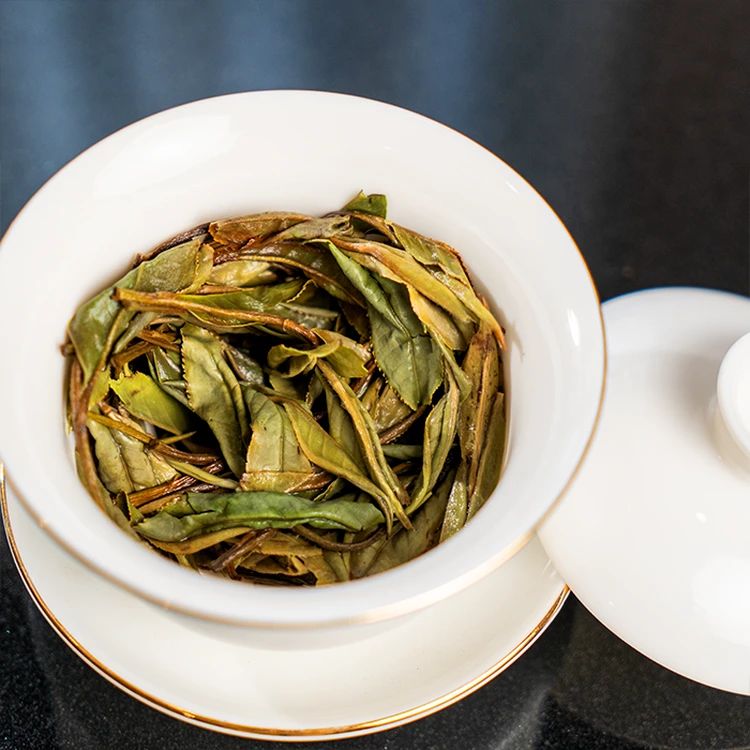
If we get distracted for a moment and steep it a little longer, the taste will not be ruined; unlike rock tea and some other teas, which can become bitter with a slight lack of attention. This characteristic of tolerating long steeping without failing is very friendly for busy professional women.
Second, white tea is also very suitable for enriching our daily water intake. In daily life, many people are reluctant to drink plain water, including myself, because plain water is bland and tasteless. Usually we rely on coffee, soda, juice, and other flavored drinks for hydration. In this case, white tea is a relatively good compromise: it has more flavor than plain water, but less sugar than juice and less caffeine than coffee. This genuinely improves the structure of our daily beverages.
Third, white tea also has storage value. If we store a cake of white tea, it will present different flavors over time and bring us different experiences. New white tea is fresh and bright, while aged white tea is mellow and smooth in taste; these are two different experiences. This small sense of anticipation is usually something female friends like.
So What Does "Women's Tea" Really Mean?
In summary, "women's tea" is only a general label. It refers to white tea's qualities of being soft in taste, low in caffeine, friendly to the stomach, simple to brew, and pleasant to drink without adding sugar. These qualities happen to match many women's tea-drinking preferences.
Of course, marketing by merchants also played a part in this; after their marketing amplified and spread it, the label became popular.
So, female tea lovers, if you are attracted by the name "women's tea", you can choose white tea with confidence and enjoy it at ease. Of course, if you like tea that is light and refreshing, low in caffeine, highly forgiving in brewing, and suitable for drinking every day, and you want a tea drink that is not fussy and fits into your pace of life, you can also choose it with confidence. We all just need to understand that behind the label "women's tea" is white tea, and it is a good tea with outstanding quality.