
Why Is White Tea Compressed into Cakes? Practical Tips for Prying Them Open
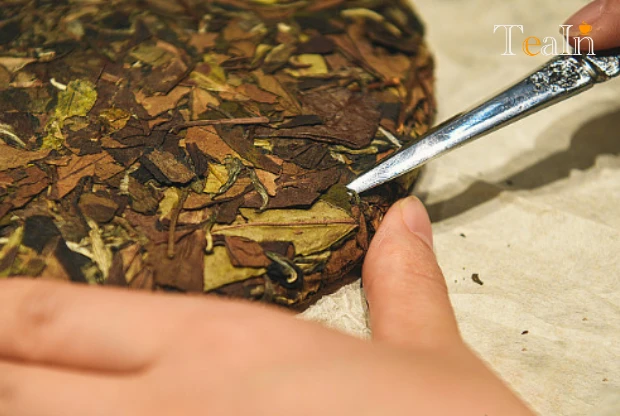
White tea has long been cherished for its delicate downy aroma and sweet, clean taste. When compressed into cakes, it develops even more distinctive flavors. During the compression process, steps like high-temperature softening and pressing gently alter the tea’s properties. The resulting tea cakes offer a richer, mellow aroma with natural honey notes, a smooth taste, and a warmer, lingering finish—qualities that make them a favorite among many tea lovers.
I. Key Reasons for Compressing White Tea into Cakes: Practicality and Flavor
1. Easier Transportation with Less Waste
Loose white tea has a fragile structure and is traditionally stored and transported in cartons. However, the loose leaves easily rub against each other during transit due to vibrations, causing the fine downy hairs (pekoe) to fall off and damaging the leaves. This directly impacts the tea’s quality and appearance. When compressed into cakes, the tea becomes compact and stable. Each cake is individually packaged before being placed in cartons, effectively resisting shocks during handling and significantly reducing waste, ensuring the tea arrives intact.
2. Space-Saving and Ideal for Long-Term Storage
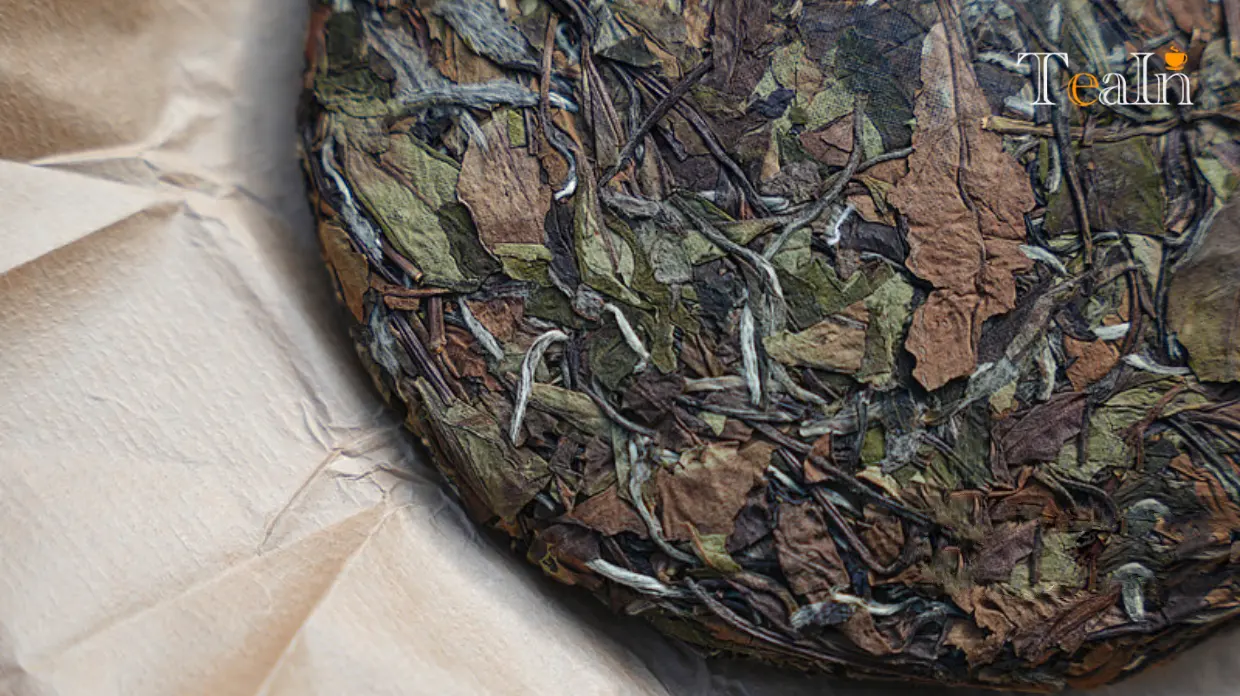
Loose white tea is bulky, requiring considerable storage space—a challenge for both home collectors and tea merchants. Compressed cakes shrink the tea’s volume dramatically, allowing more tea to be stored in the same space and improving storage efficiency. More importantly, the compact structure of tea cakes creates a stable environment for aging. This encourages gentle transformation of the tea’s internal compounds over time, leading to a richer, more mellow flavor. It’s a key reason why aged white tea cakes "improve with age."
3. Enhances Flavor and Adds Texture
Compression isn’t just about changing the tea’s shape—it also optimizes its flavor. The high-temperature softening step gently breaks down some cell walls, making it easier for nutrients to be released during brewing. The compact structure also slows and prolongs enzymatic reactions during aging, gradually developing unique flavors like honey or jujube. Compared to loose white tea, cakes offer a fuller, more robust taste with a longer-lasting sweet aftertaste, delivering a more layered drinking experience.
II. Practical Tips for Prying White Tea Cakes: Extract Leaves Without Breaking Them
Prying a tea cake may seem simple, but it requires skill. Without the right method, you’ll end up with crushed tea leaves—wasting tea and ruining the brewing experience. Follow these steps to easily extract intact leaves.
1. Prepare the Right Tools
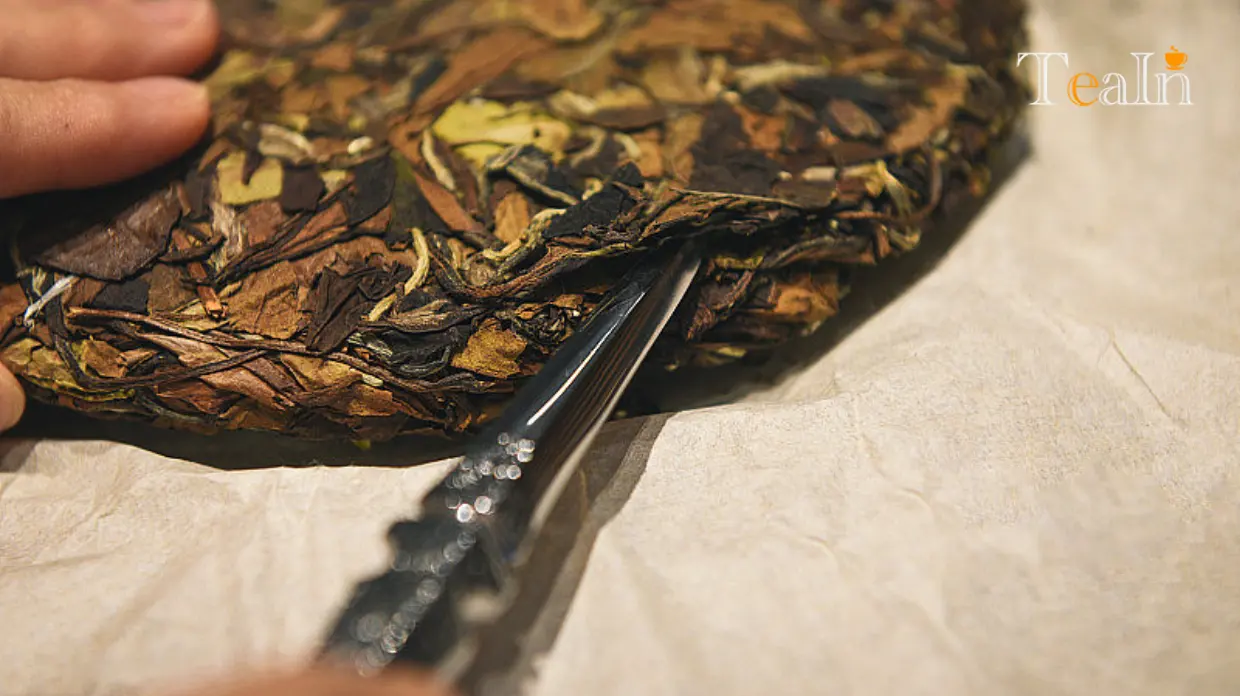
Use a professional tea needle or tea knife. These tools have sharp, sturdy tips that can easily slide into the cake’s gaps. Avoid regular kitchen knives, which can damage the tea and pose safety risks. Rinse the tool with hot water before use to remove impurities and preheat it slightly, helping to separate the leaves more smoothly.
2. Find the Right Spot and Work with the Layers
The key to prying is locating the tea’s natural layers. Tea cakes are pressed by stacking leaves layer by layer, creating tiny gaps between them. Start with the bottom of the cake (the side with the indentation), where the structure is looser and gaps are easier to find. If gaps are hard to spot on the bottom, the side works too. Align the tip of the tea needle or knife with a gap, hold it parallel to the cake, and gently slide it in. Avoid stabbing straight down, as this will destroy the leaf structure.
3. Control Force to Separate Smoothly
Once the tool is inserted deeply enough, gently wiggle it from side to side to widen the gap and separate the layers. Then slowly lift upward to remove a piece of intact tea. Never pry upward immediately after inserting the tool a little—this will crush the leaves. If the piece you remove is too thick, use the knife to slice it thinner along the natural layers. Thin slices of tea release nutrients evenly during brewing, resulting in a better taste.
4. Make Use of Crumbles—Don’t Waste Any Aroma
It’s inevitable to get some crumbles when prying a cake for the first time. Don’t throw them away. These crumbles release nutrients quickly, so adding a small amount to your brew enhances the concentration and aroma of the first one or two infusions, making the taste fuller. Collect leftover crumbles and brew them quickly in a gaiwan to enjoy the tea’s fresh flavor.
5. Precautions to Protect the Cake and Tools
Use moderate force—enough to separate the leaves but not so much that the entire cake breaks apart. Aged tea cakes may become tighter over time, so let them soften at room temperature for a short while before prying. Be careful with sharp tools to avoid cutting your hands. After use, clean tea crumbs off the tool and store it safely.
Compressing white tea into cakes is a traditional process that balances practicality and flavor. Prying is the crucial step between storing the cake and enjoying the tea. By understanding why cakes are made and mastering prying techniques, you can better appreciate the value of white tea cakes and brew them to their full potential. Whether you’re drinking alone or sharing with friends, this process adds extra joy to your tea experience.