Why Does Bailu Shoumei Have Colorful Hues? The Origin and Characteristics of Its Natural Color
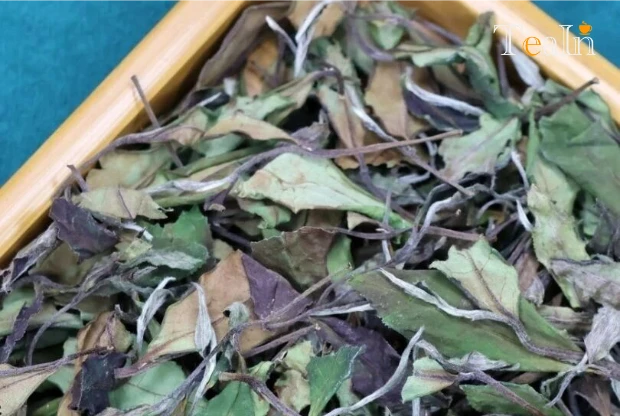
Many attentive tea lovers notice that Bailu Shoumei (Shoumei picked around the Bailu solar term) boasts exceptionally rich colors, often displaying a vibrant mix of green, yellow, orange, and brown. This unique appearance makes it stand out among Shoumei varieties. Compared to spring Shoumei, which is dominated by green, or Hanchu Shoumei (picked around the Hanchu solar term), Bailu Shoumei’s colorful hues are the most prominent, becoming its highly recognizable natural feature.
The colorful tones of Bailu Shoumei stem from the combined effects of the solar term and the natural environment. The Bailu period marks the transition from midsummer to late autumn. By this time, tea leaves have been exposed to abundant sunlight throughout the summer, making their chlorophyll structure relatively unstable. During the subsequent natural withering and drying processes, the unstable chlorophyll easily decomposes and transforms into different pigments such as xanthophyll and erythrophyll. These newly formed pigments interweave with the undegraded chlorophyll in the leaves, ultimately giving the finished tea a colorful appearance—green mixed with yellow, yellow tinged with orange, and dotted with light brown. The color distribution on each leaf is natural and random, with no fixed pattern.
Color differences among Shoumei from different seasons further confirm Bailu Shoumei’s uniqueness. Spring Shoumei is picked in spring when temperatures are mild. The leaves have stable and abundant chlorophyll, resulting in a uniform, single green color. Hanchu Shoumei is picked after Bailu, when temperatures gradually drop and leaf growth slows down. The degree of chlorophyll decomposition is far less than that of Bailu Shoumei, so the colorful effect is not obvious, with dark green and light yellow as the main hues. Bailu Shoumei, however, falls at a critical juncture of significant temperature changes and sufficient light accumulation, making it the only Shoumei variety that stably exhibits colorful colors.
It is particularly important to note that the colorful hues of Bailu Shoumei have no bearing on its quality. This naturally formed color variation does not affect the tea liquor’s taste, aroma, or represent the tea’s superiority or inferiority. After brewing, Bailu Shoumei’s liquor still maintains the characteristic bright orange-yellow color of Shoumei, with a sweet and mellow taste and a dry, refreshing aroma unique to autumn tea. The colorful appearance is merely its visual hallmark as a "representative of autumn tea," a unique imprint bestowed by the natural environment, allowing drinkers to enjoy a visual feast of nature before savoring its flavor.
The colorful colors of Bailu Shoumei are a natural wonder created by the interaction of the solar term, light, and the growth laws of tea trees. It breaks people’s inherent perception of Shoumei as "single green," showcasing the vitality and agility of autumn tea through rich colors. Tasting Bailu Shoumei not only allows one to experience its warm and mellow taste but also to appreciate the traces of seasonal changes in nature through its unique colorful appearance—this is the unique charm of Bailu Shoumei.
Summary
This article addresses the core question "Why does Bailu Shoumei have colorful hues?" It explains that the unique coloration originates from tea leaves exposed to abundant summer sunlight during the Bailu period, which makes their chlorophyll structure unstable. During processing, the chlorophyll decomposes into pigments like xanthophyll and erythrophyll, which interweave with residual chlorophyll to form colorful effects. The article compares the color differences between spring Shoumei (dominated by green), Hanchu Shoumei (subtle colorful tones), and Bailu Shoumei, emphasizing that the colorful appearance is a natural feature of Bailu Shoumei and unrelated to quality. Finally, it points out that the colorful hues of Bailu Shoumei are the result of the combined action of the solar term and natural environment, adding unique visual and tasting value to the tea.